How To Draft A Basic Skirt Pattern: Step-by-step, No Math
anicka.design
Home » How To Draft A Basic Skirt Pattern: Step-by-step, No Math
4.7
(31)
UPDATED MARCH 2026
Draft your custom basic skirt block from scratch using only four measurements. Use my interactive tutorial and let it handle all the math for you. Perfect for beginners and hobby sewists, you can draft the basic skirt by hand or download it as a full-scale PDF, ready to print at home.
The basic skirt pattern, also called a skirt block, is a foundational sewing pattern. You can use it to make a simple skirt or combine it with a bodice to create a dress. By adjusting the darts or adding pleats, folds, flounces, or gathers, you can create a variety of shapes and fashion designs.
Tools and measurements you will need
Tools: large sheet of paper, pencil, pen or Sharpie, long ruler, French/flexible curve.
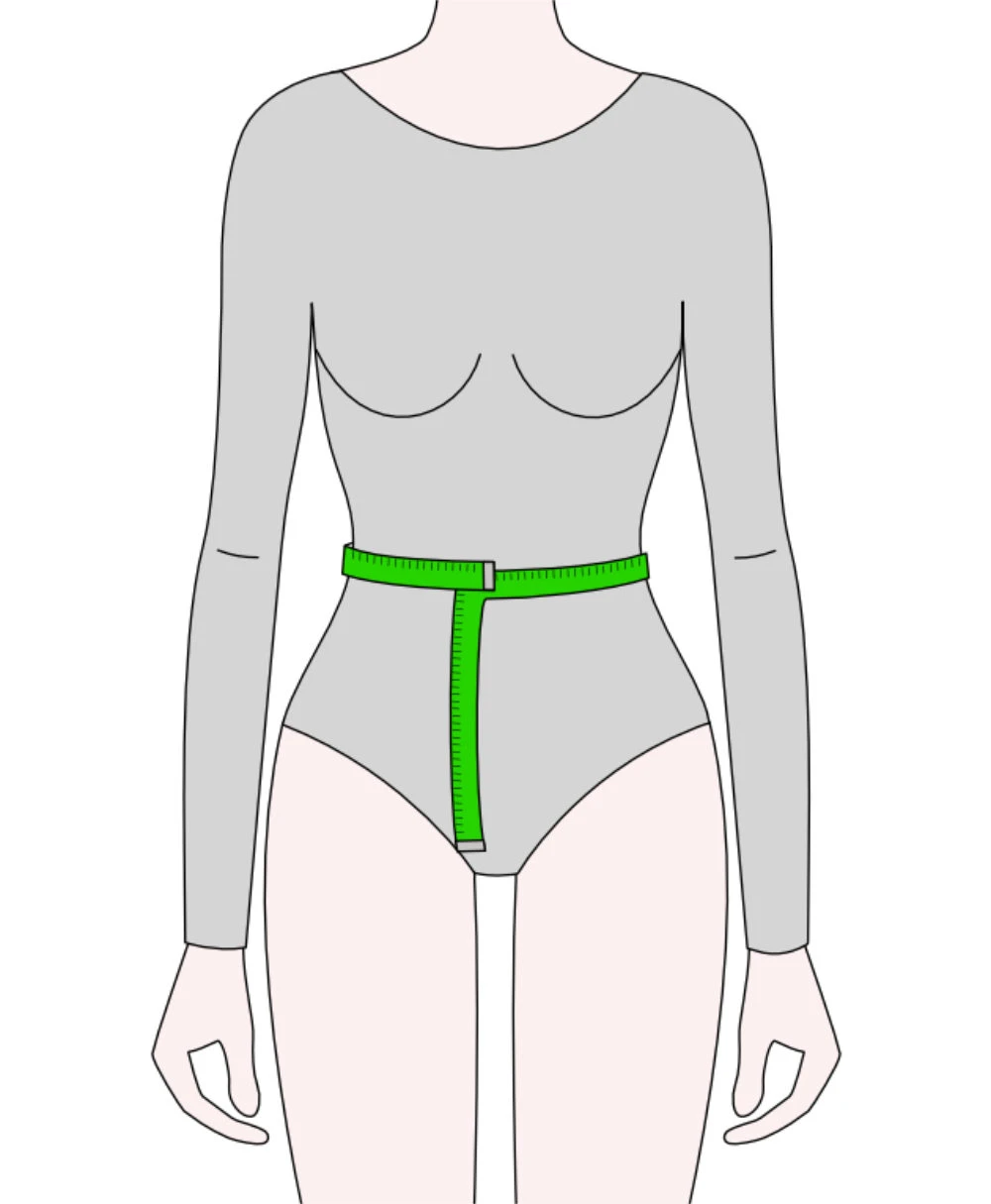
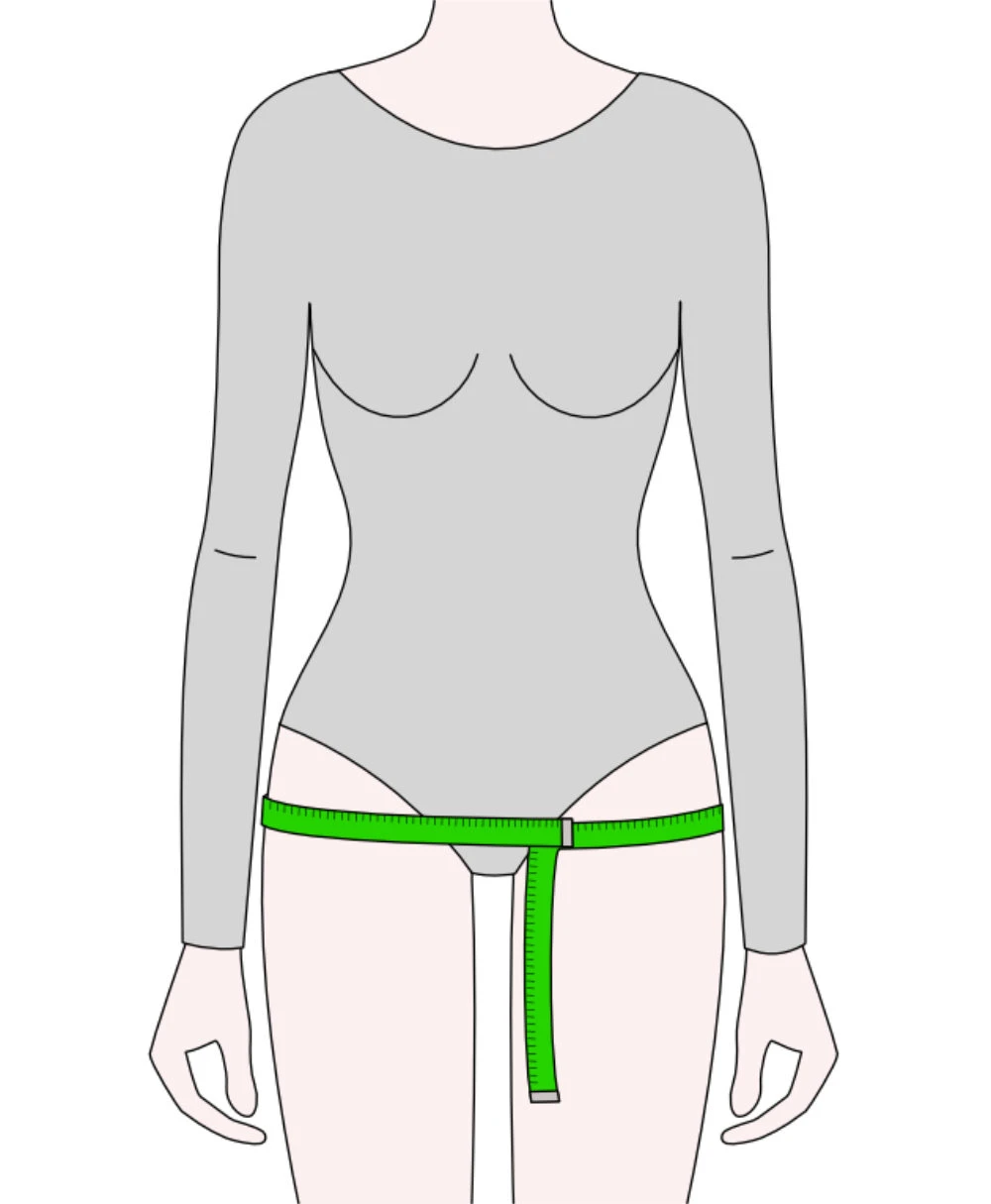
Measurements: waist circumference, hip circumference, waist-to-hip length, skirt length. Use a tape measure and elastic bands. More tips on taking measurements in FAQs.
How the interactive tutorial works in 3 easy steps
1. Fill in your measurements
Enter your measurements following the illustrations in the tutorial.
2. Get personalised results
Click “Prepare tutorial” to get your personalised drafting tutorial or full-scale pattern.
3. Download a PDF instantly
Download your custom tutorial or full-scale pattern PDF instantly.
Need time to collect your measurements? Download your Skirt Measurements Cheat Sheet
Download this one-page, print-ready PDF with illustrated instructions. Fill it out at your own pace, then
return to the interactive tutorial below.
Waist circumference
Hip circumference
Waist to hip length
Waist to knee length
Seam and hem allowance
Please check and fix your measurements highlighted in red in order to proceed.
What’s included after you complete the interactive tutorial
Online tutorial
FREE
✓ PREVIEW of custom-fit drafting dimensions
✓ Step-by-step illustrations
✓ Formulas for calculated values
PDF tutorial
$4.99
✓ COMPLETE Custom-fit drafting dimensions
✓ Step-by-step drafting illustrations
✓ Formulas for calculated values
✓ Your measurements overview
✓ Approximate fabric consumption
✓ Step-by-step waistband drafting
Full-scale PDF pattern
$9.99
✓ Full-scale custom-fit basic skirt pattern for home print
✓ 2 types of straight waistband
✓ Your measurements overview
✓ Approximate fabric consumption
✓ Easy pattern assembly layout
✓ Pattern symbols overview
✓ Printer settings for best results
Your custom-fit drafting tutorial is just a few clicks away. Enter your measurements and click ‘Prepare tutorial’.
No registration • Instant download • Secure checkout
Your custom-fit PDF pattern is just a few clicks away. Enter your measurements and click ‘Prepare tutorial’.
No registration • Instant download • Secure checkout
How to draft the basic skirt pattern step-by-step
If you use the interactive tutorial, it will automatically determine how many front and back darts you need for your basic skirt pattern.
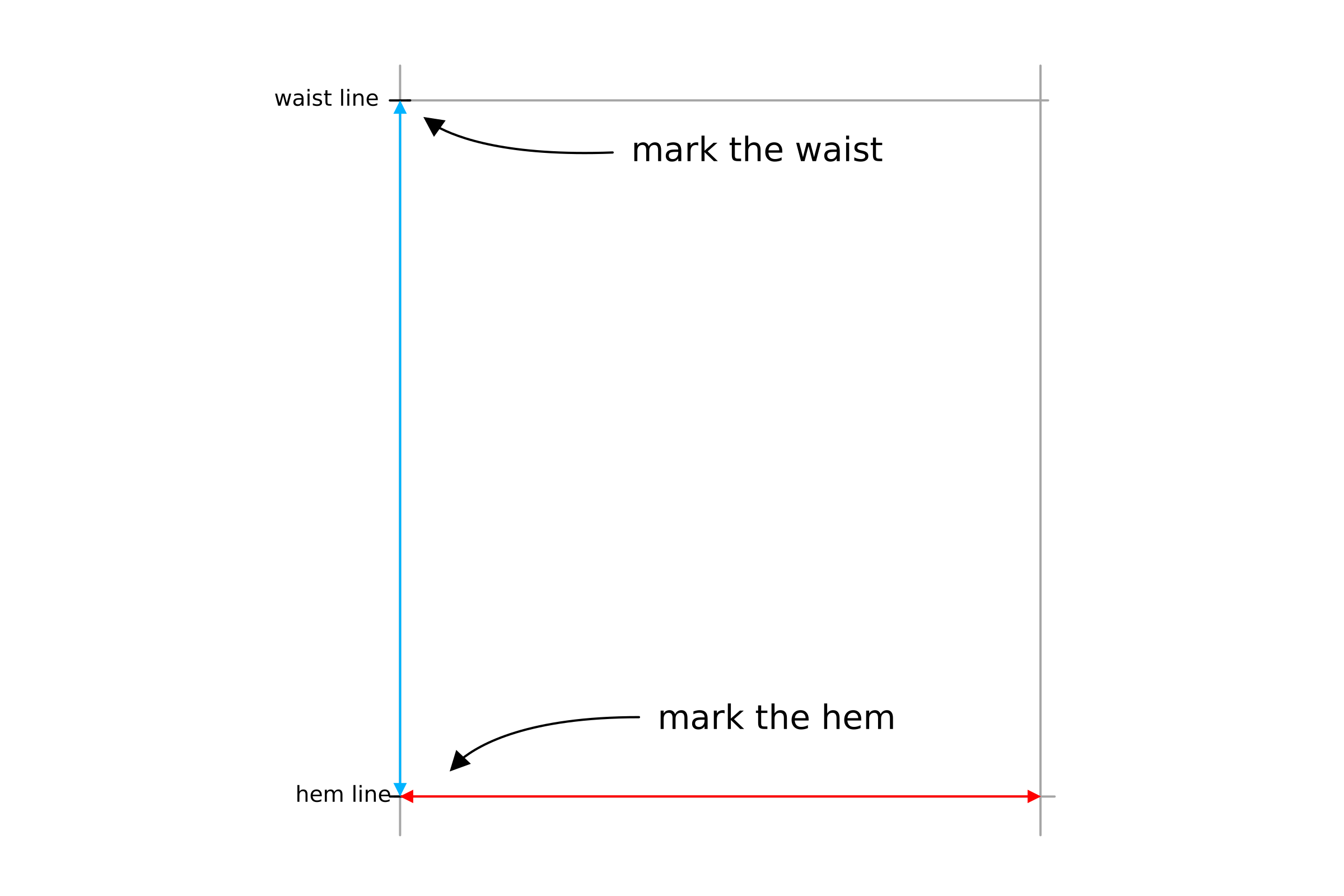
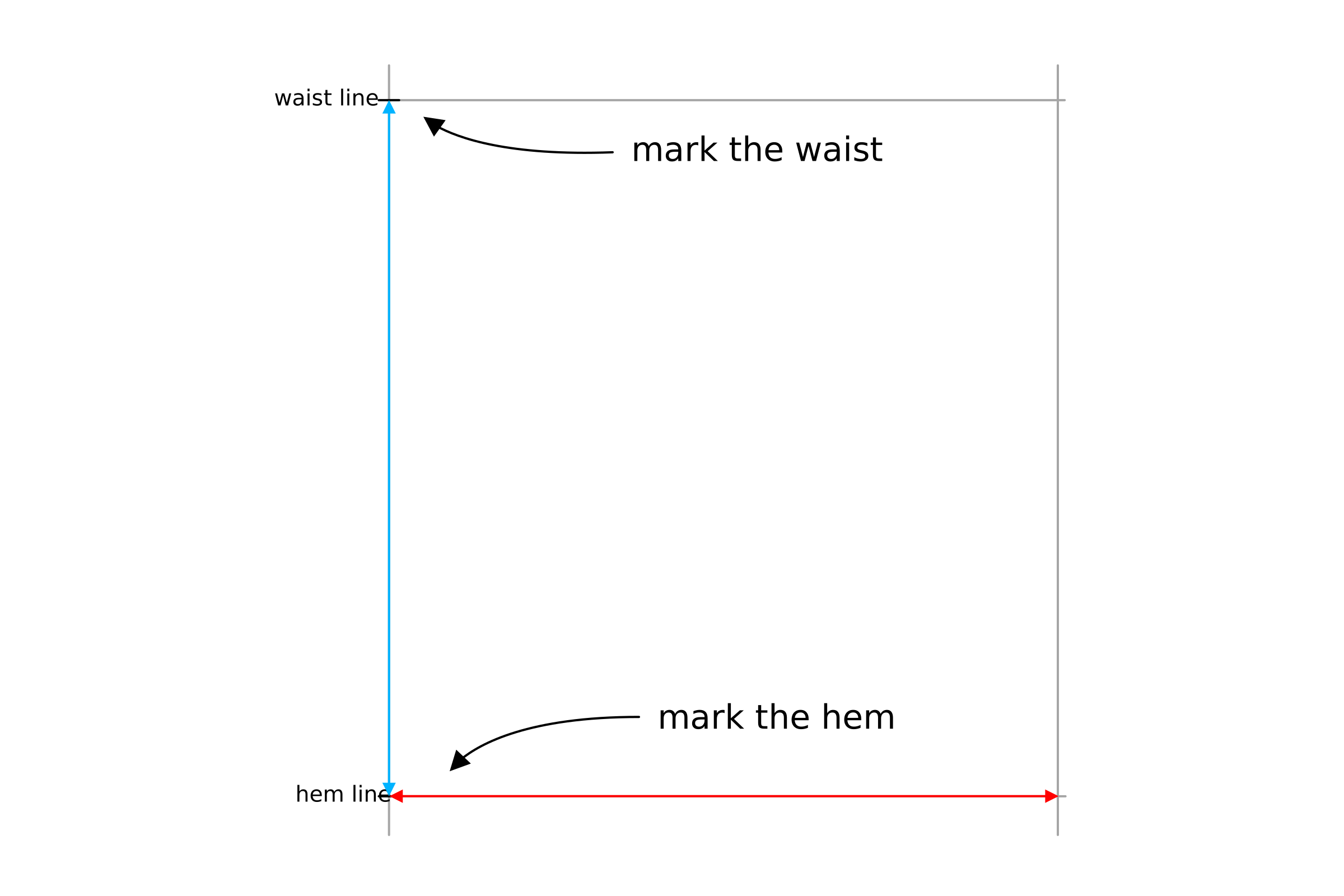
1.First, draw a large rectangle.
The bottom of the rectangle represents the hem of the skirt pattern, while the top represents the waist
line.
The height of the rectangle corresponds to the skirt length (see the image below).
a
b
a = skirt length
b = (hip circumference + ease at hip) / 2
⎯⎯⎯⎯⎯⎯⎯⎯⎯⎯⎯
hip circumference =
ease at hip =
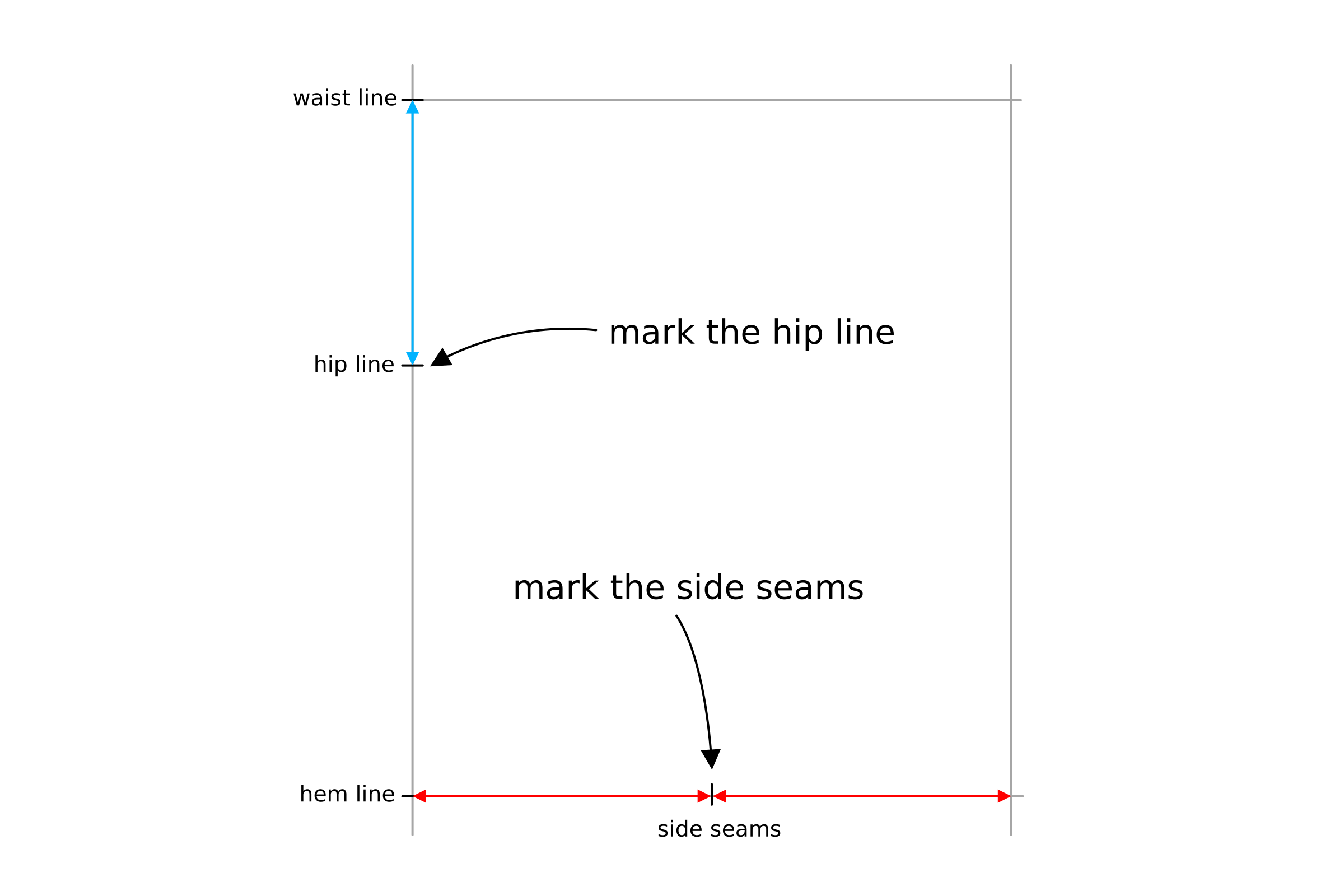
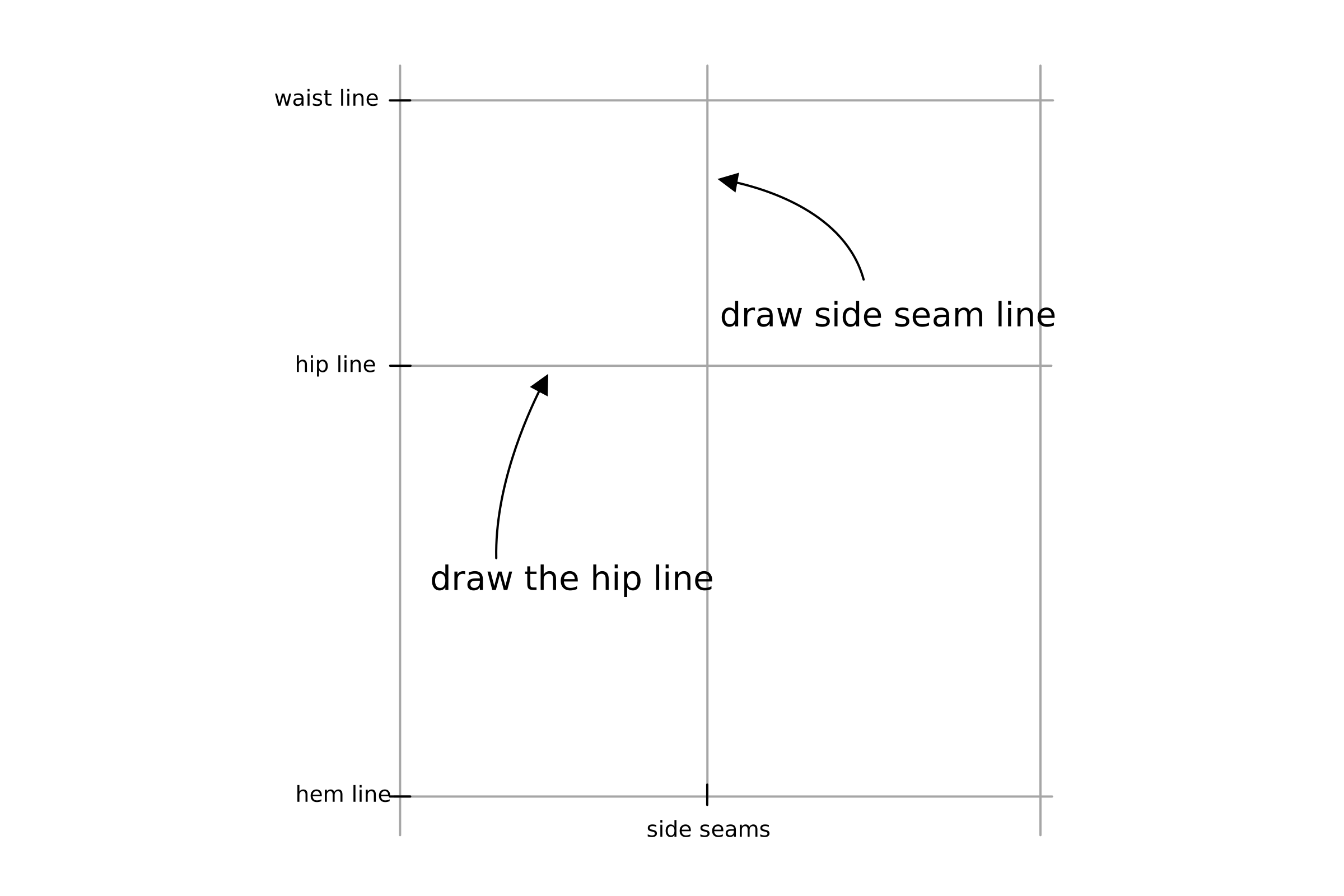
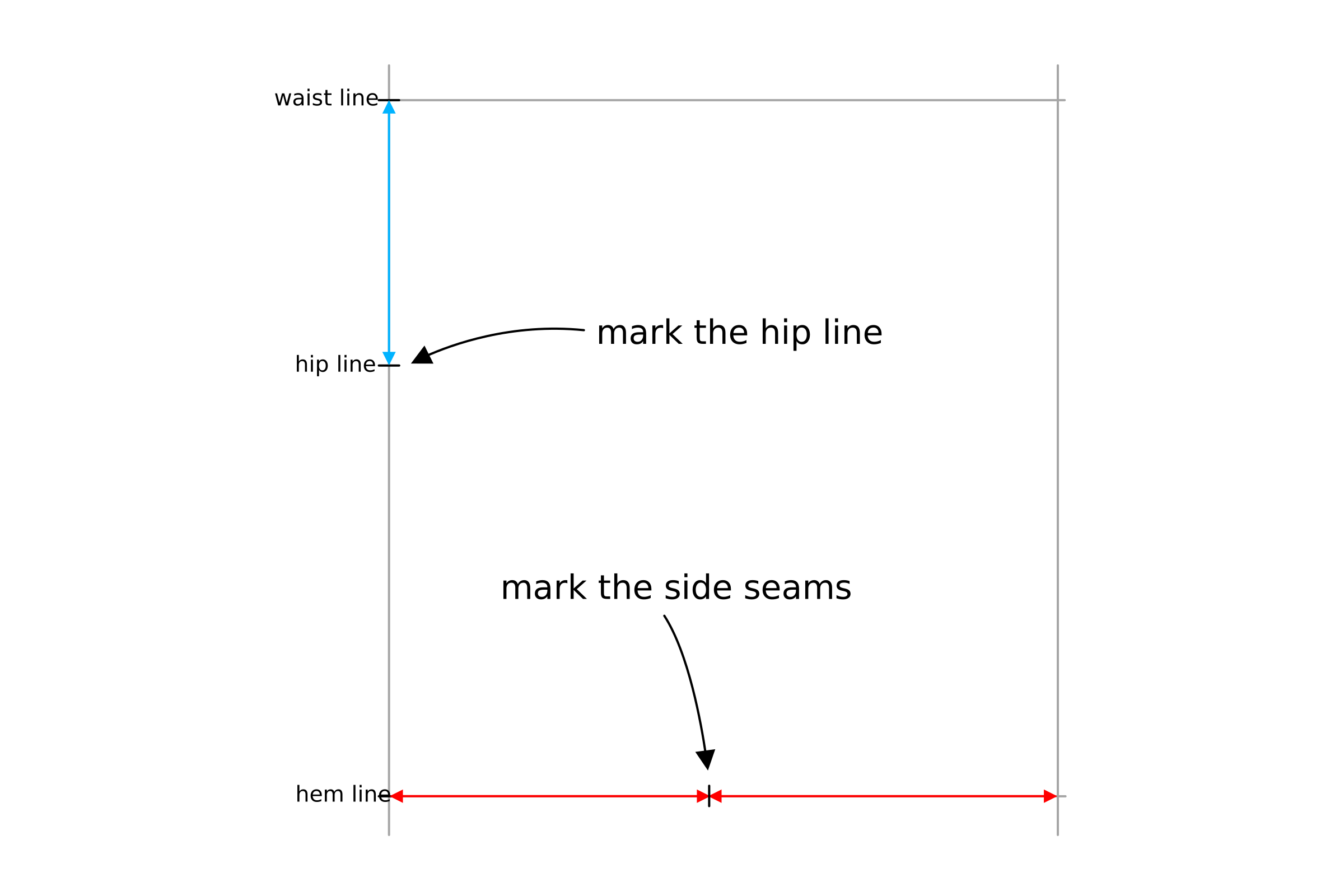
2. On the left vertical line, mark the waist-to-hip length measurement. At the centre of the hem
line, mark the side seams (see the image below).
c
d
e
c = waist to hip length
d = (hip circumference + ease at hip) / 4
⎯⎯⎯⎯⎯⎯⎯⎯⎯⎯⎯
hip circumference =
ease at hip =
Prefer to skip the calculations entirely? ⬇️ Download your PDF tutorial with all personalised measurements, or get your full-scale basic skirt pattern.
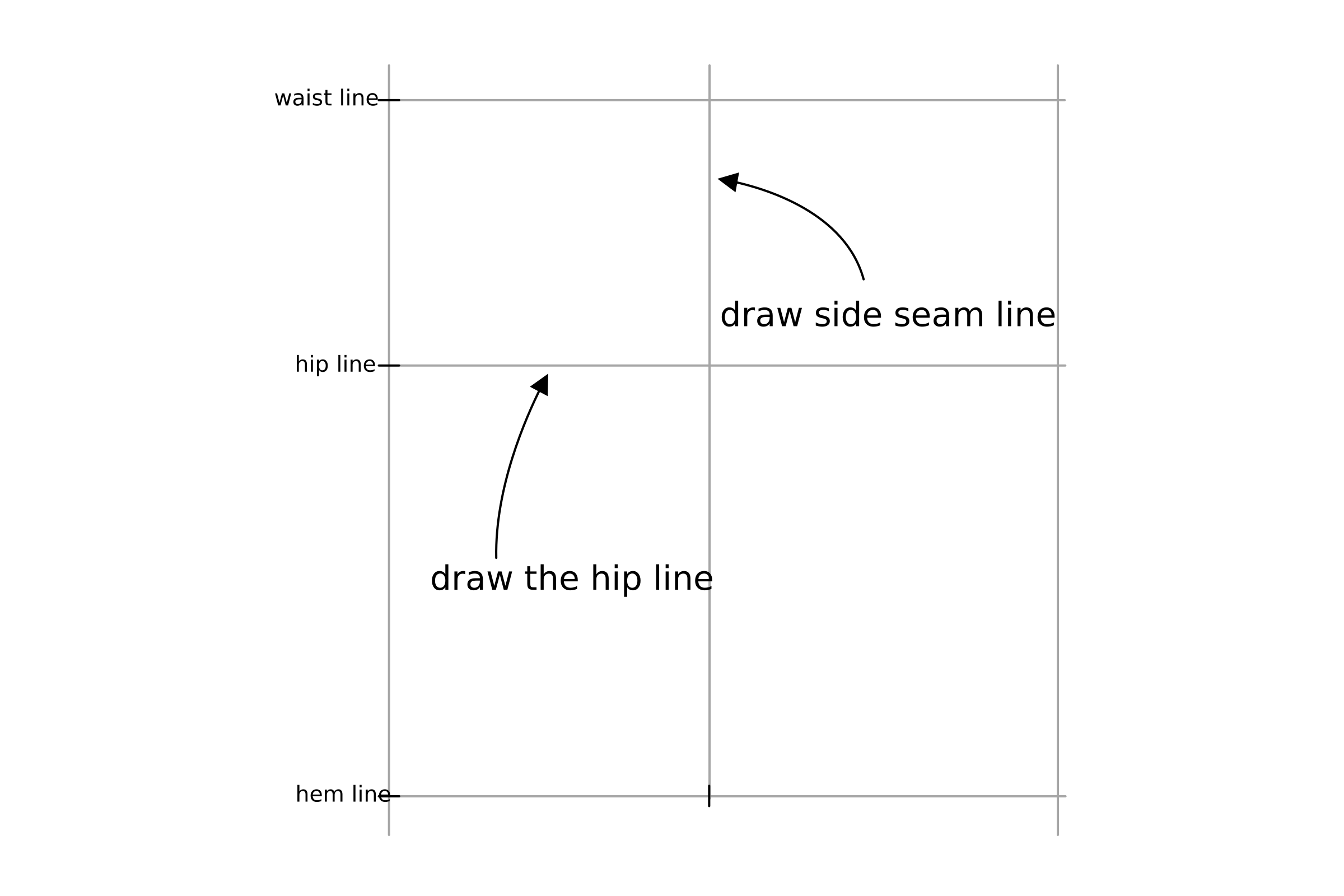
3. From the side seams marking, draw a vertical line up to
the waistline. From the hip line marking, draw a horizontal line across the large rectangle (see the
image below). This grid will be the area within which you will draw the basic skirt pattern.
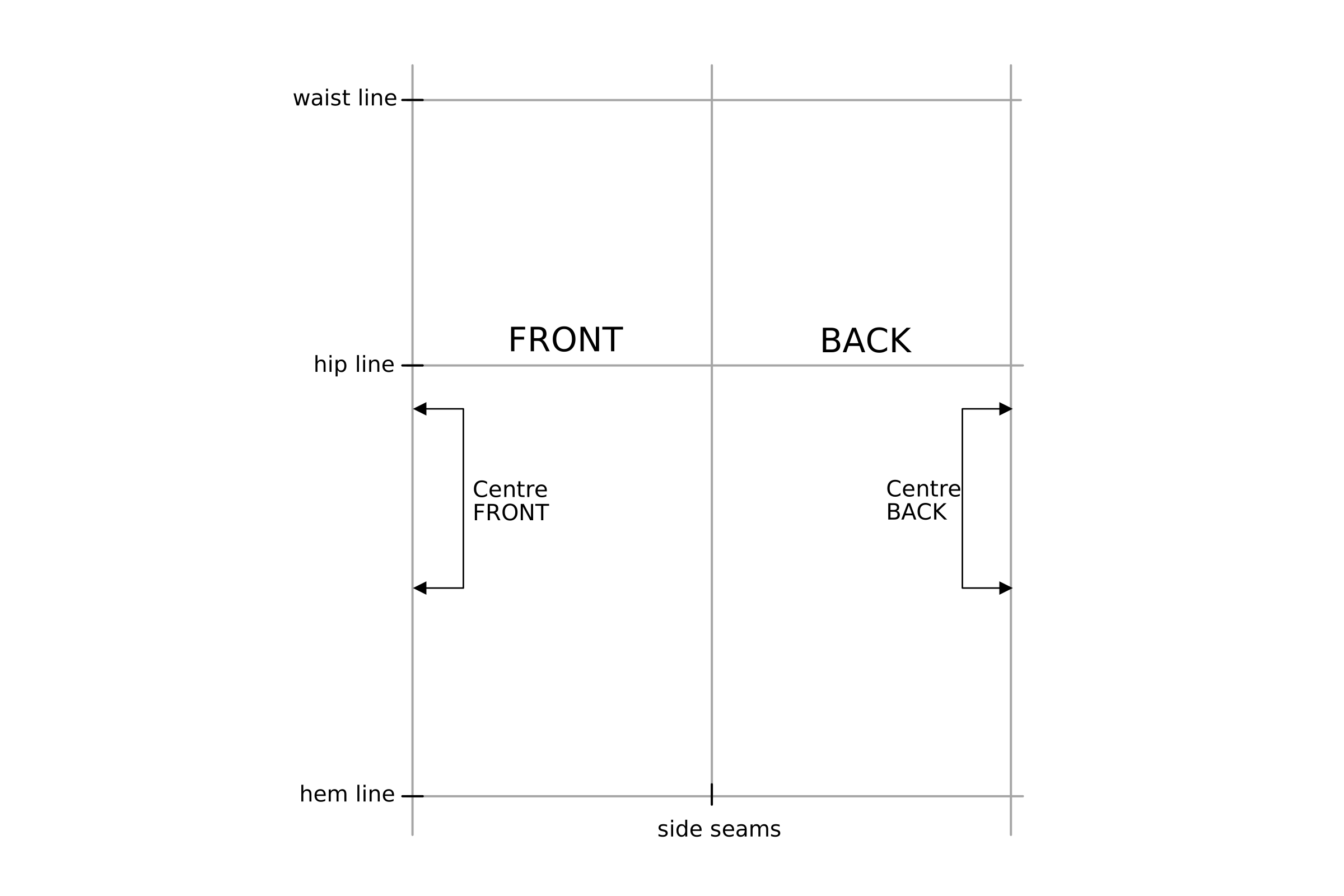
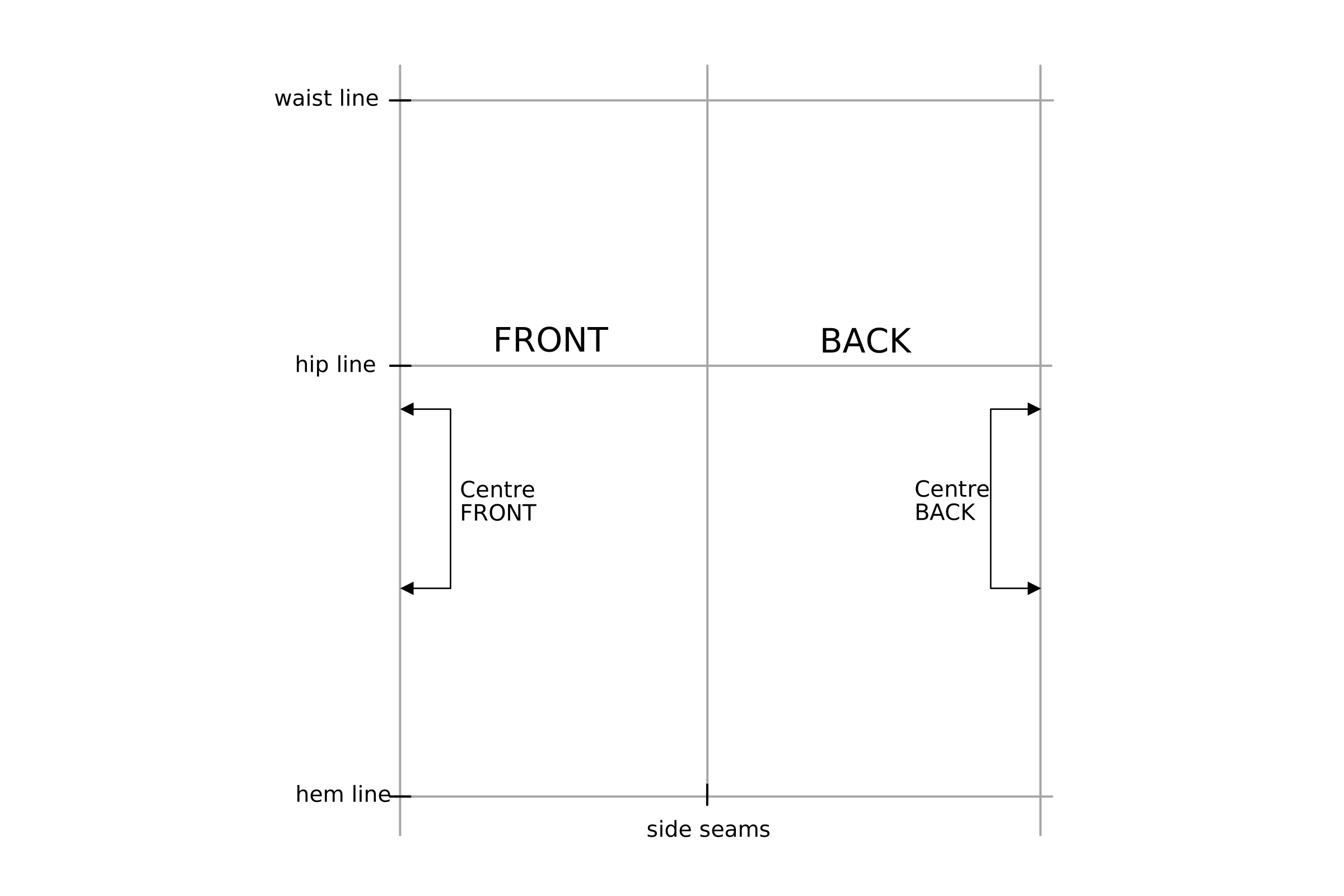
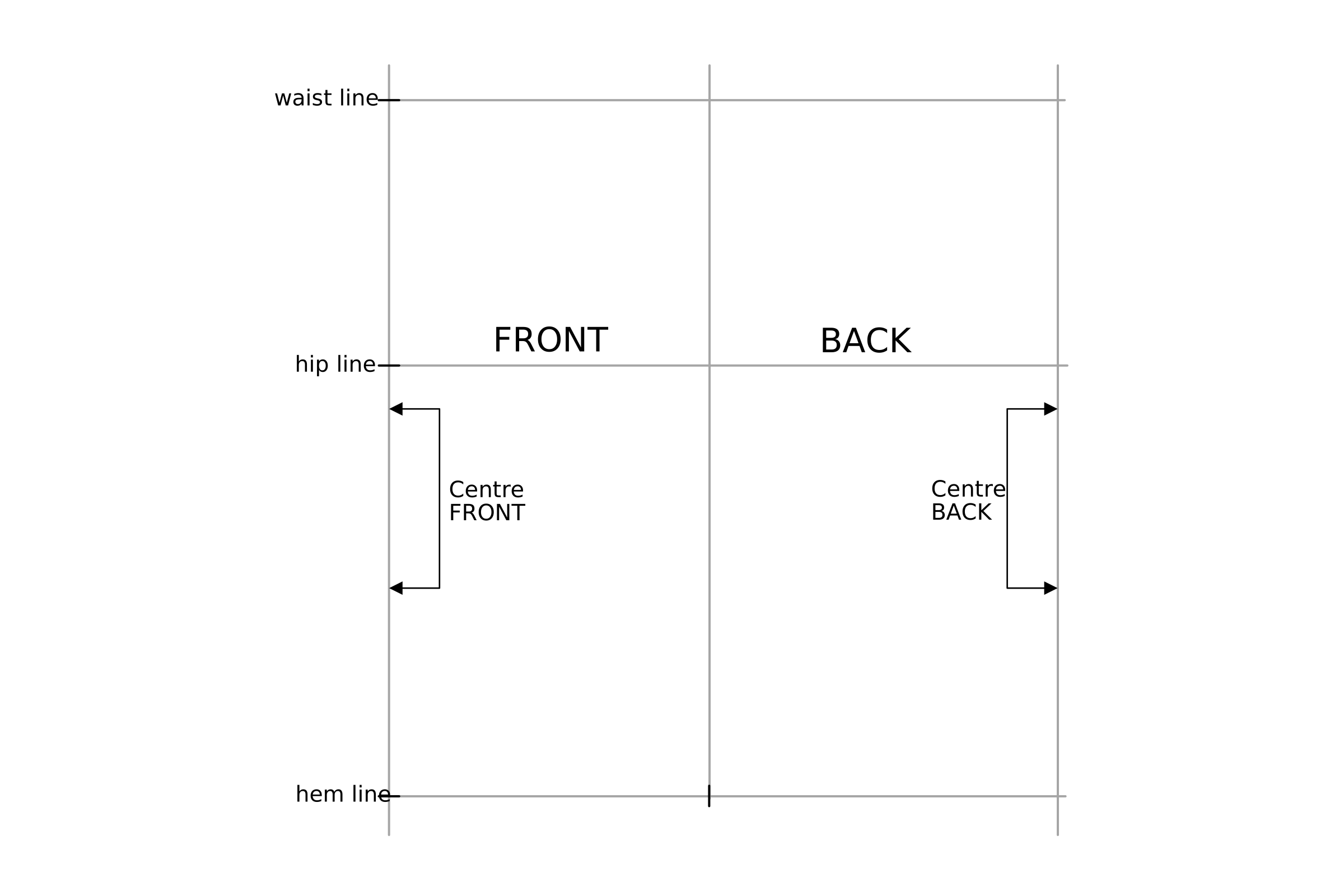
4.Label the pattern: the left side will be the FRONT pattern piece, and the right side will
be the BACK pattern piece (see the image below).
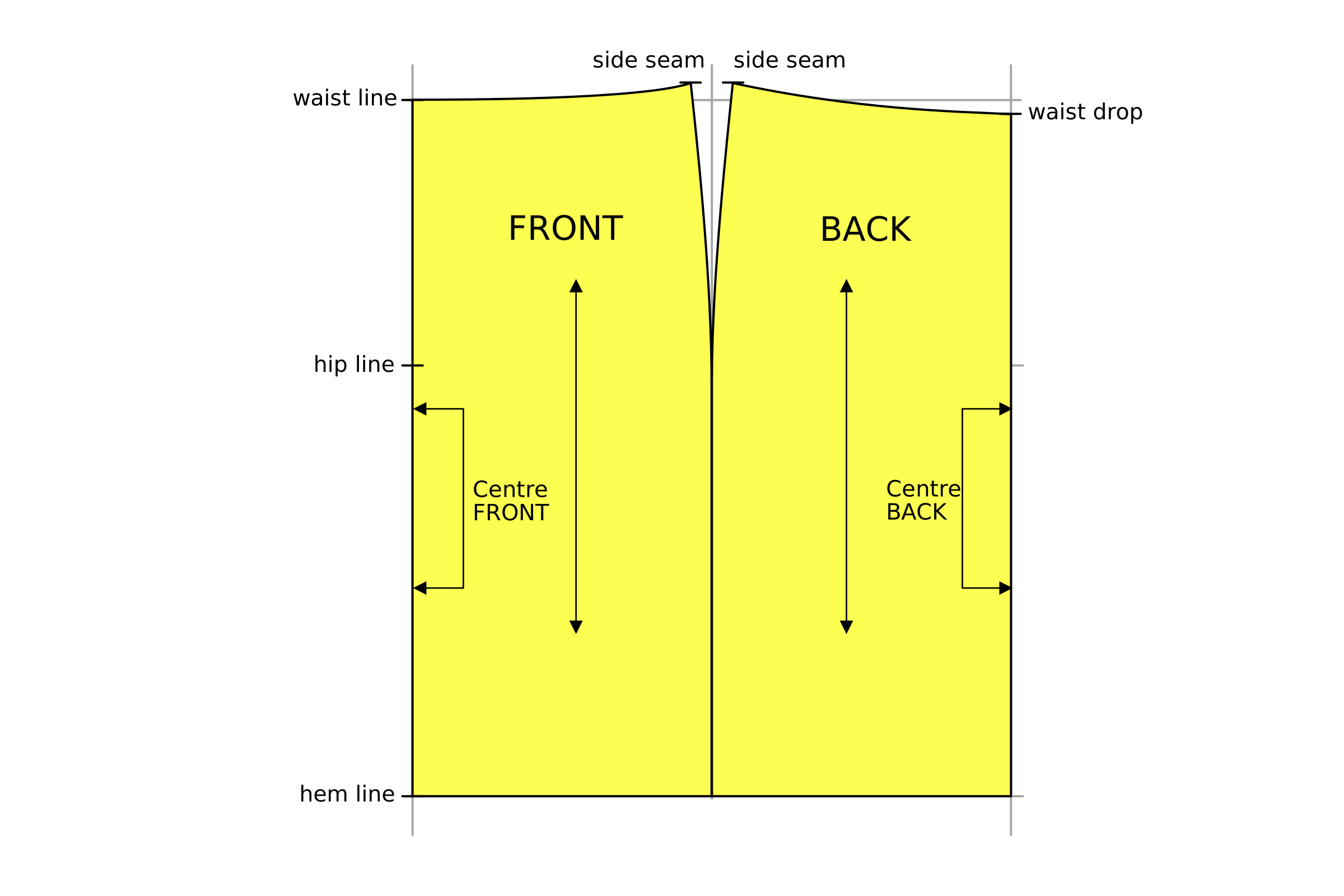
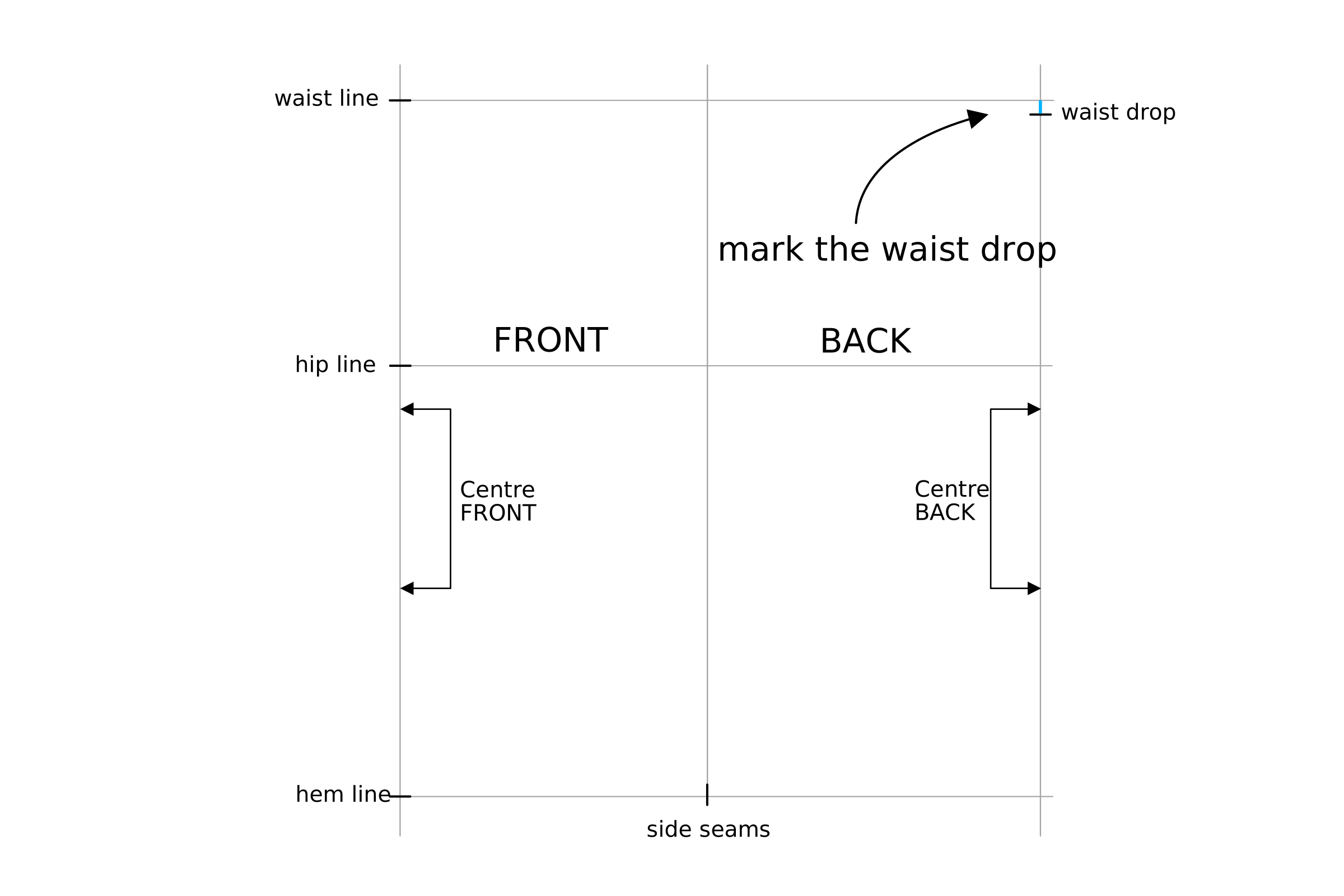
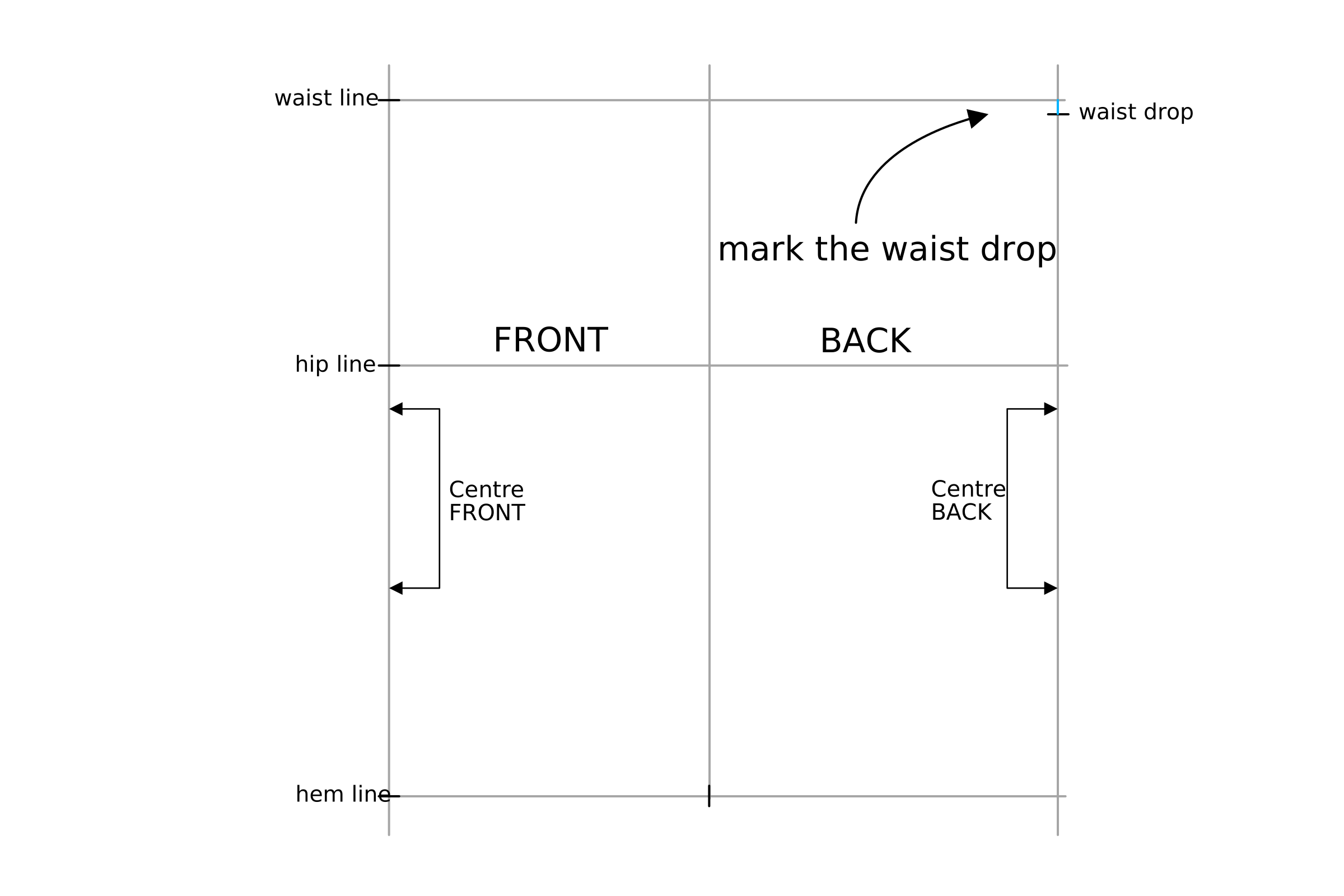
5.On the centre BACK, mark a waist drop: 3/8” (1 cm)
to make the waist at the BACK fit nicely (see the image below). This small drop helps prevent gaping
by allowing the waistline to follow the
natural curve of the lower back. It ensures a snug, comfortable fit and helps the skirt sit smoothly without
pulling away or creating unwanted gaps.
f
waist drop = 3/8”
(1 cm)
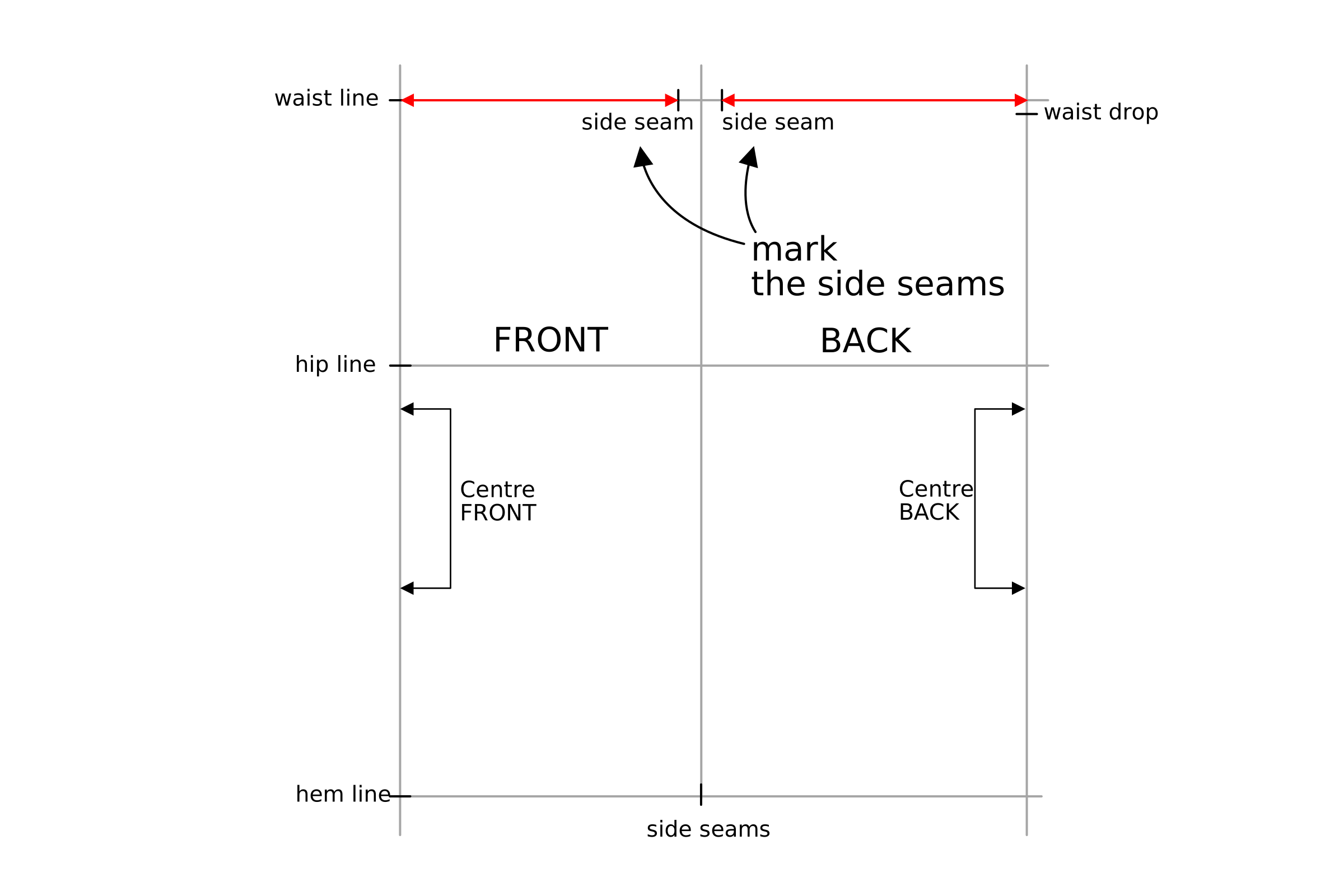
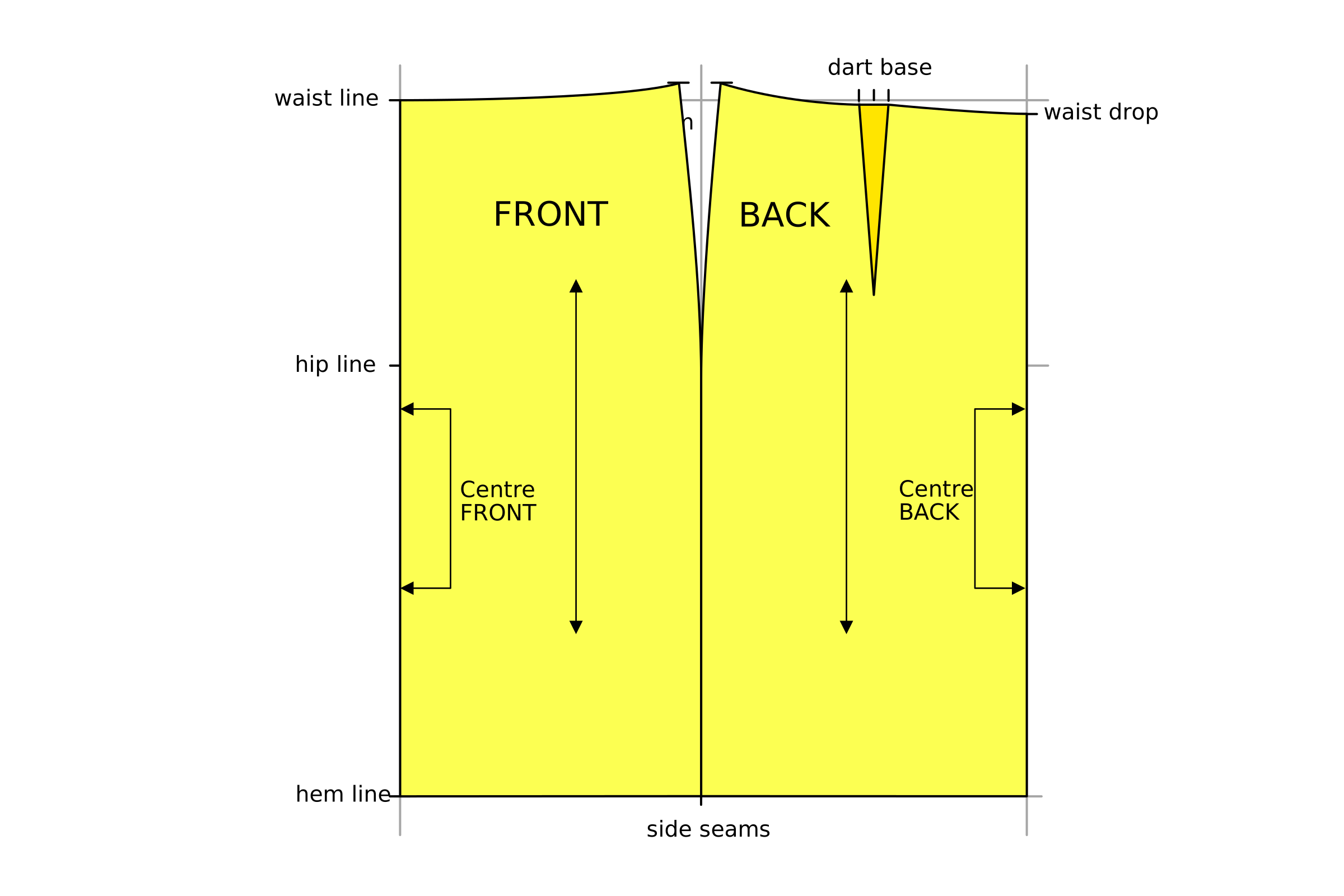
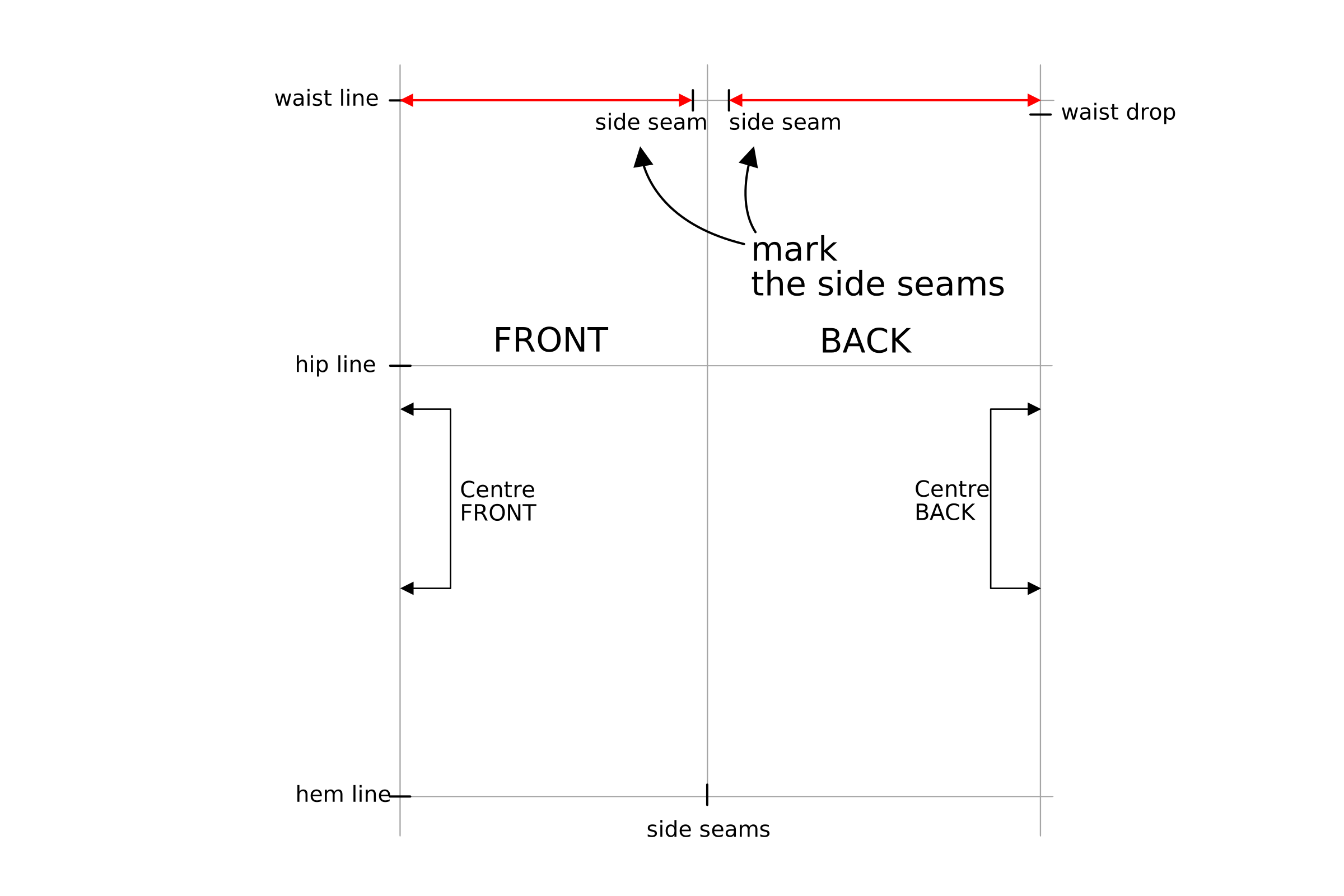
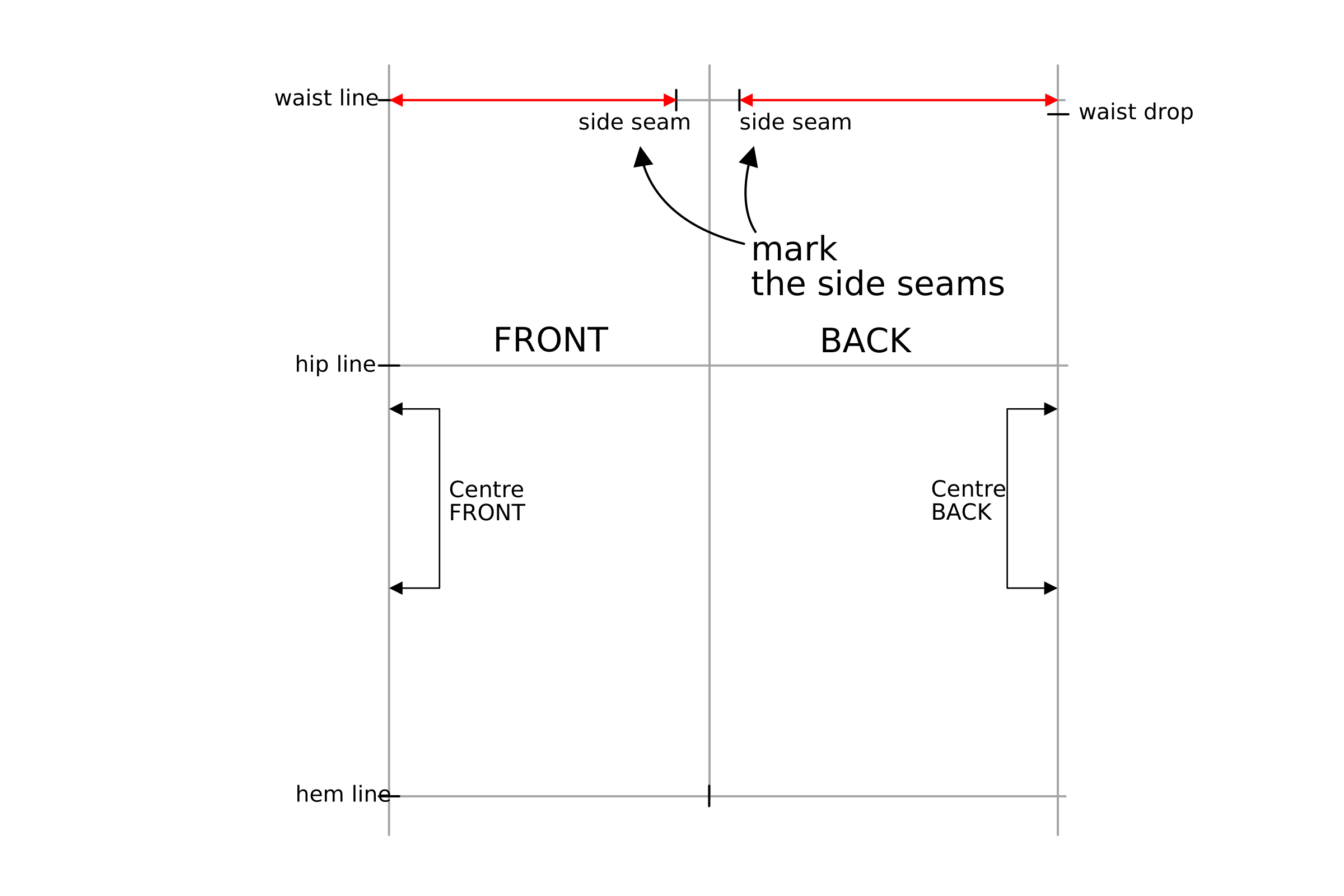
6. Now, focus on the waist. On both the FRONT and BACK,
mark the side seams. Measure the distance from the centre FRONT and centre BACK. The resulting side
seam intake should be within 1 – 3 cm (3/8 – 1 1/8”)
(see the image below).
g
h
g = (waist circumference + ease at waist) / 4
⎯⎯⎯⎯⎯⎯⎯⎯⎯⎯⎯
waist circumference =
ease at waist =
7. To accommodate the hips and create a neat waistline, lift
the side seams slightly on both the FRONT and BACK pattern pieces. Raise the side seams by 1/2” (1.2
cm) (see the image below).
i
raising the side seam = 1/2” (1.2 cm)
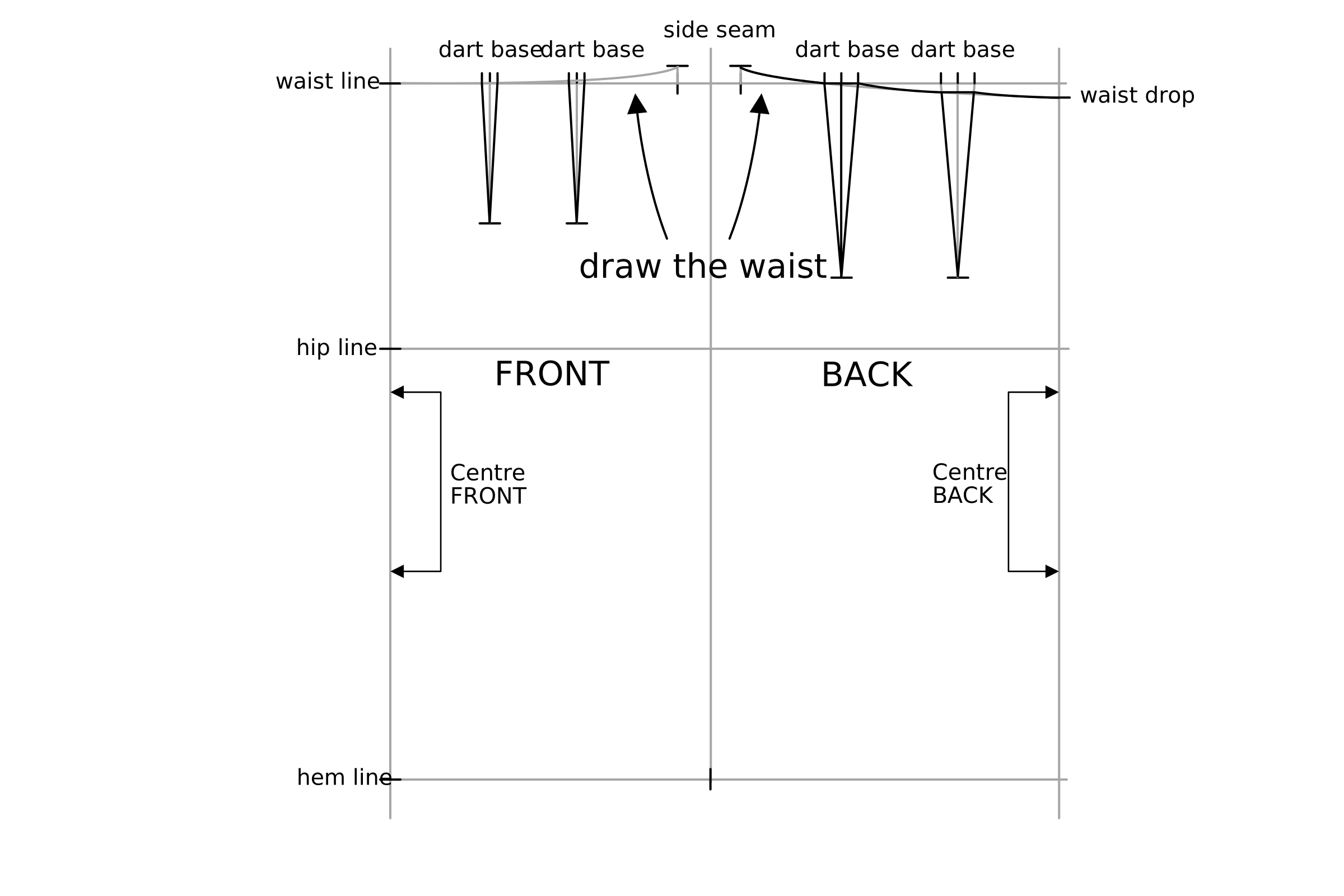
8.Draw the waistline of the skirt. Using a French curve, start from the raised waist and
blend
it into a relatively straight line at the center FRONT. At the BACK, extend the waistline smoothly to
the drop marking
(see the image below).
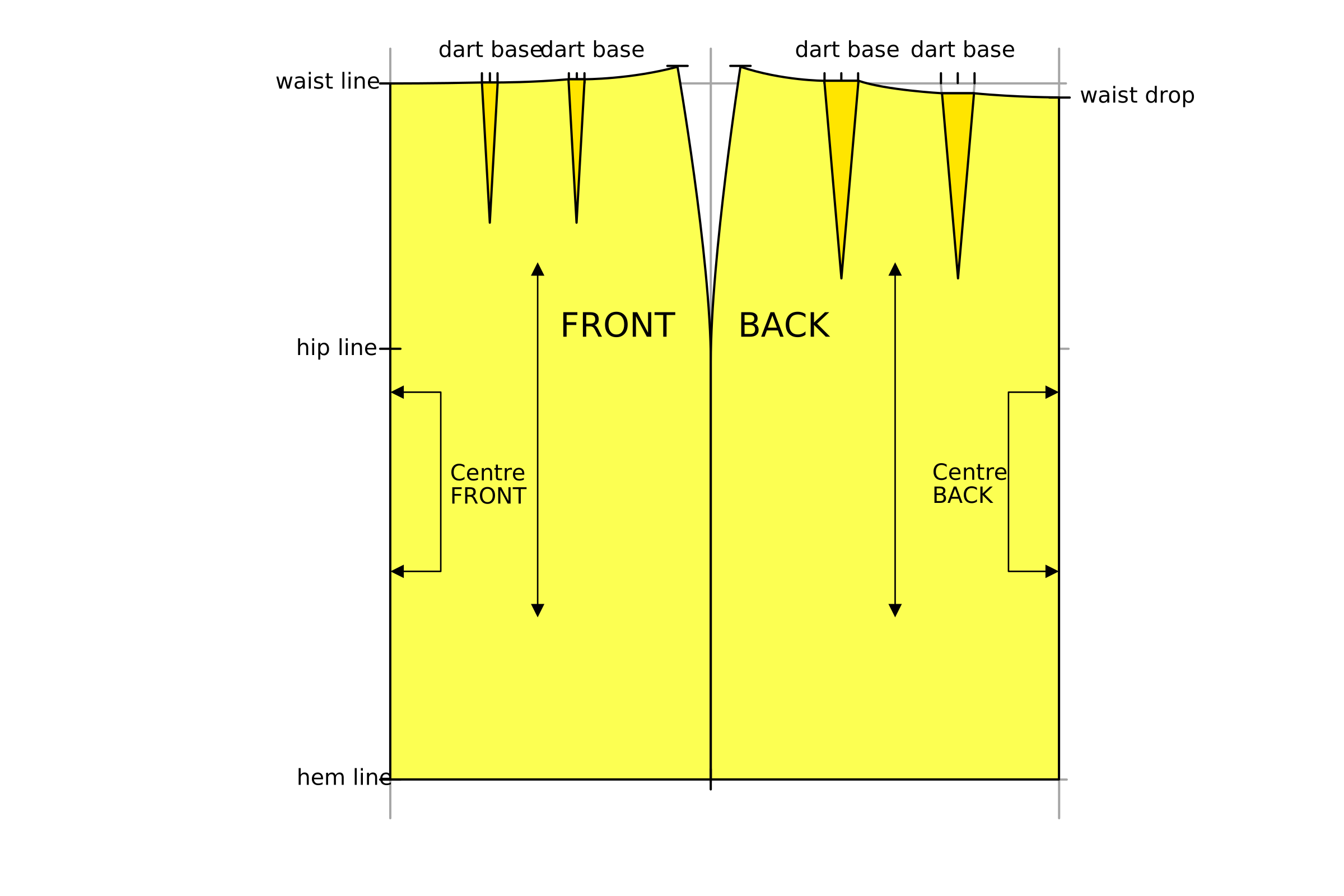
9.Switch to the straight ruler and draw all the
straight lines of the basic skirt pattern: the straight part of the waist, the centre FRONT and
centre BACK
lines, the side seam, and the hem of the skirt.
Also, mark the grainline of the skirt, which should be parallel to the centre FRONT and centre BACK. Your
basic pattern is complete (see the image below). You can now transfer the pattern to fabric
and sew a muslin to test it.
1.First, draw a large rectangle.
The bottom of the rectangle represents the hem of the skirt pattern, while the top represents the waist
line.
The height of the rectangle corresponds to the skirt length (see the image below).
a
b
a = skirt length
b = (hip circumference + ease at hip) / 2
⎯⎯⎯⎯⎯⎯⎯⎯⎯⎯⎯
hip circumference =
ease at hip =
2. On the left vertical line, mark the waist-to-hip length measurement. On the hem line, mark the
side seams. You may notice that the BACK pattern piece has slightly more width than the FRONT.
This
is intentional: the body requires a bit more fabric at the back to comfortably accommodate the shape of
the
seat, while the front needs less. The exact measurements for the FRONT and BACK can be
calculated using the formula below.
c
d
e
c = waist to hip length
d = (hip circumference + ease at hip) / 2 × 0.48
e = (hip circumference + ease at hip) / 2 × 0.52
⎯⎯⎯⎯⎯⎯⎯⎯⎯⎯⎯
hip circumference =
ease at hip =
Prefer to skip the calculations entirely? ⬇️ Download your PDF tutorial with all personalised measurements, or get your full-scale basic skirt pattern.
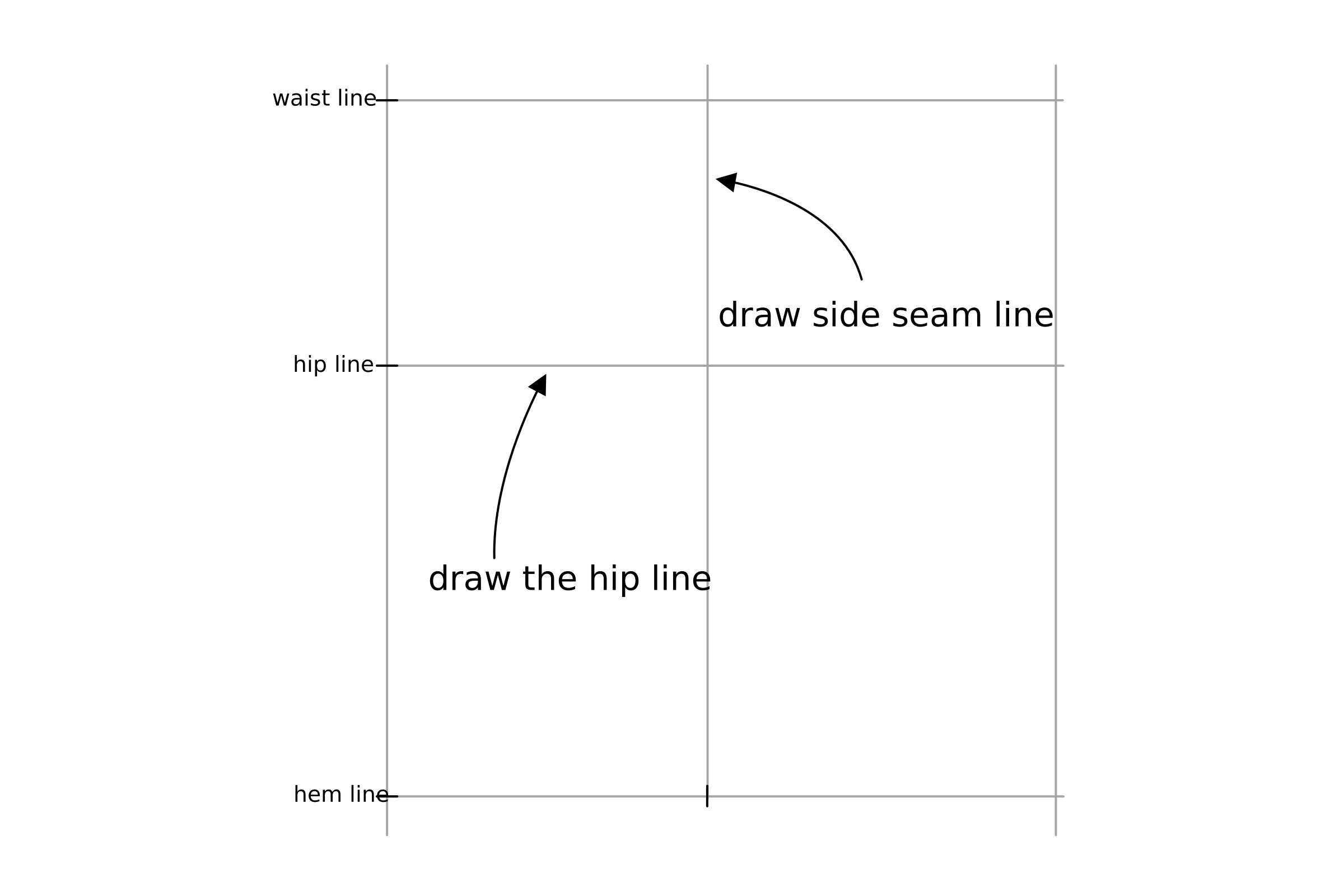
3. From the side seams marking, draw a vertical line up to
the waistline. From the hip line marking, draw a horizontal line across the large rectangle (see the
image below). This grid will be the area within which you will draw the basic skirt
pattern.
4.Label the pattern: the left side will be the FRONT pattern piece, and the right side
will be the BACK pattern piece (see the image
below).
5.On the centre BACK, mark a waist drop: 3/8” (1 cm)
to make the waist at the BACK fit nicely (see the image below). This small drop helps prevent
gaping
by allowing the waistline to follow the
natural curve of the lower back. It ensures a snug, comfortable fit and helps the skirt sit smoothly
without
pulling away or creating unwanted gaps.
f
waist drop = 3/8”
(1 cm)
6. Now, focus on the waist. On both the FRONT and BACK, mark
a preliminary position of the side seams (see the image below). The measurement for the
BACK
also includes the BACK dart width.
g
h
= (waist circumference + ease at waist) / 4
= (waist circumference + ease at waist) / 4 + BACK dart width
⎯⎯⎯⎯⎯⎯⎯⎯⎯⎯⎯
BACK dart width = ((hip circumference + ease at hip) – (waist
circumference + ease at waist)) × 0.4 / 2
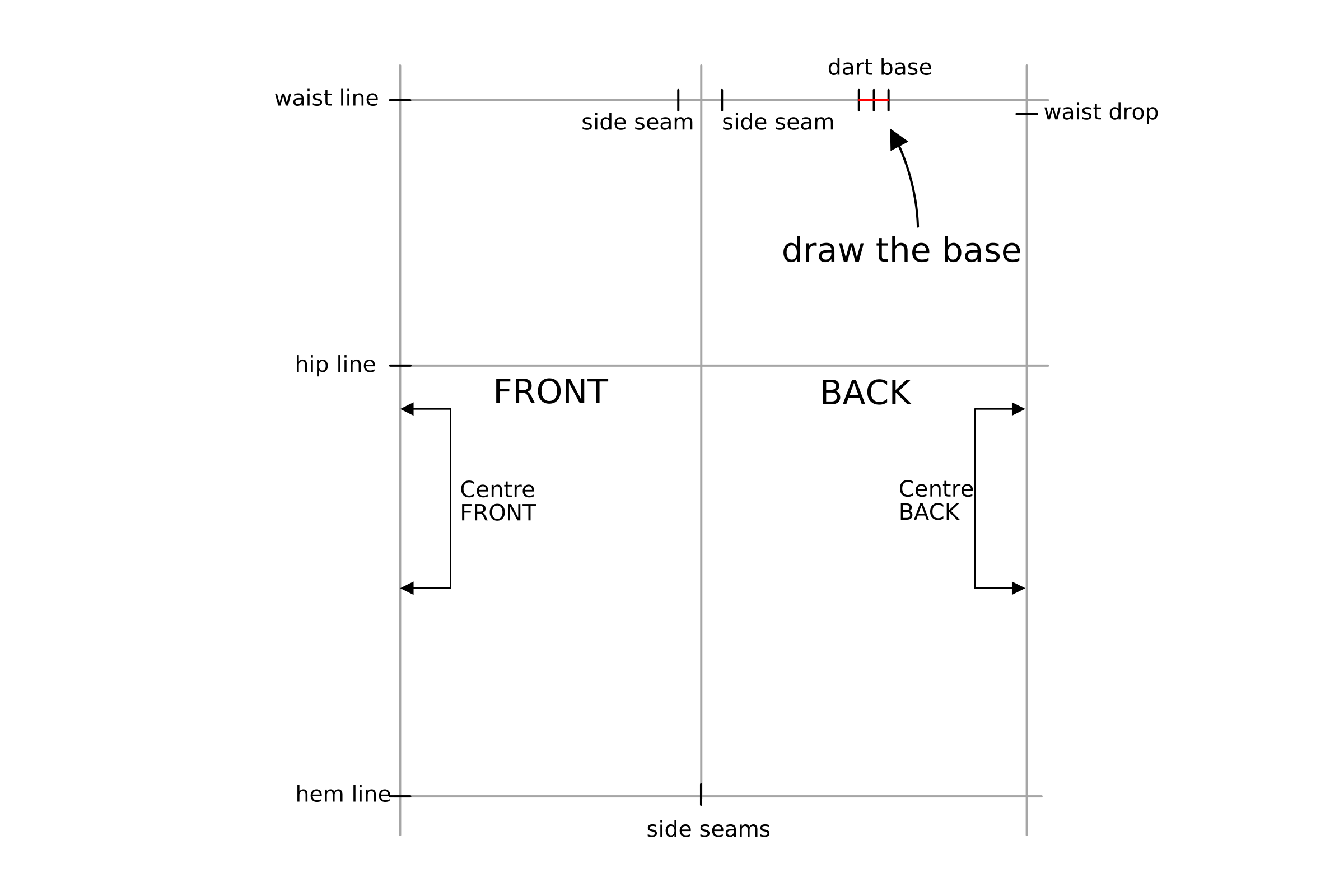
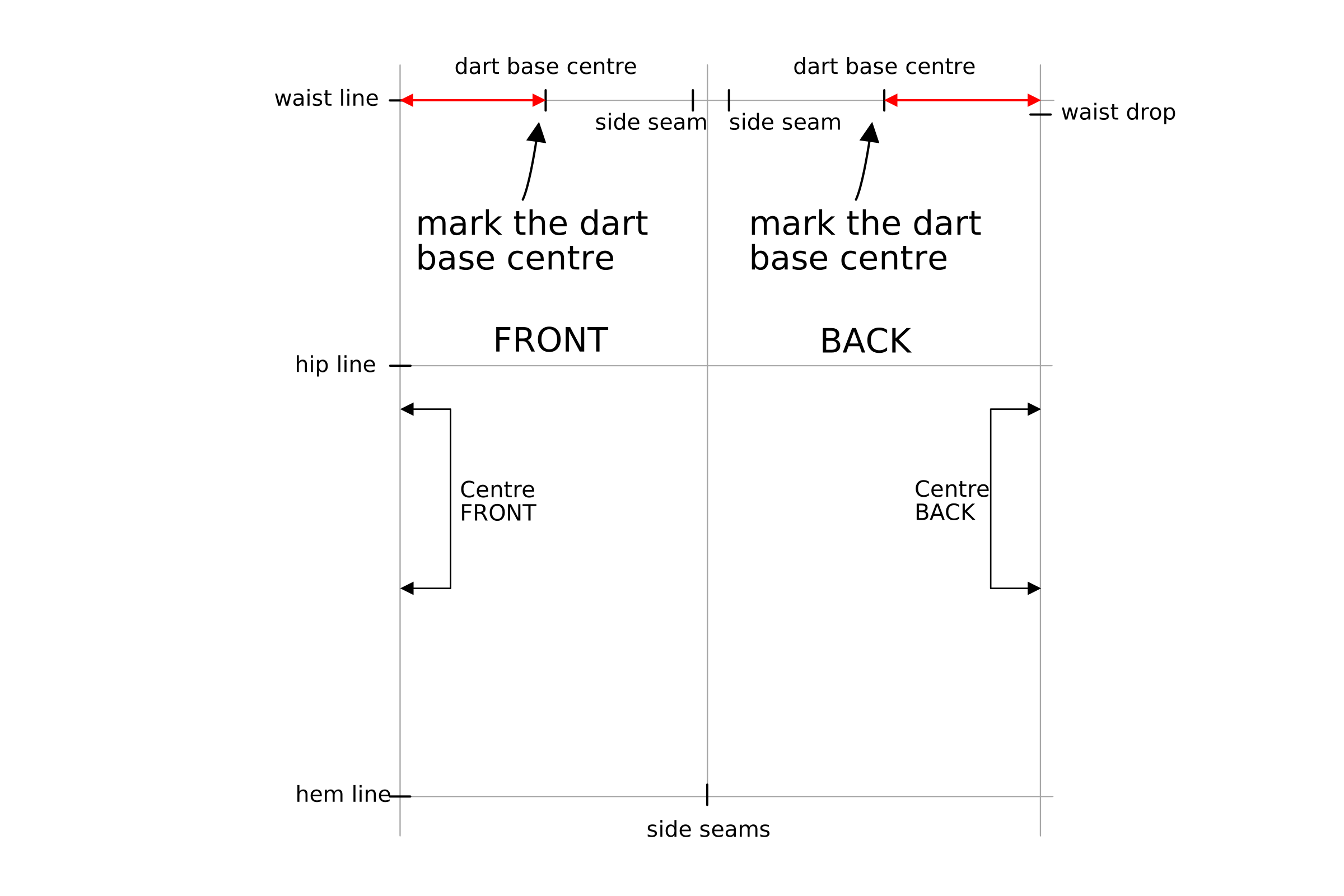
7.Locate and mark the BACK dart base centre (see the image below). To find its
position on the waist line, use the formula below.
i
i =
BACK waist width / 2
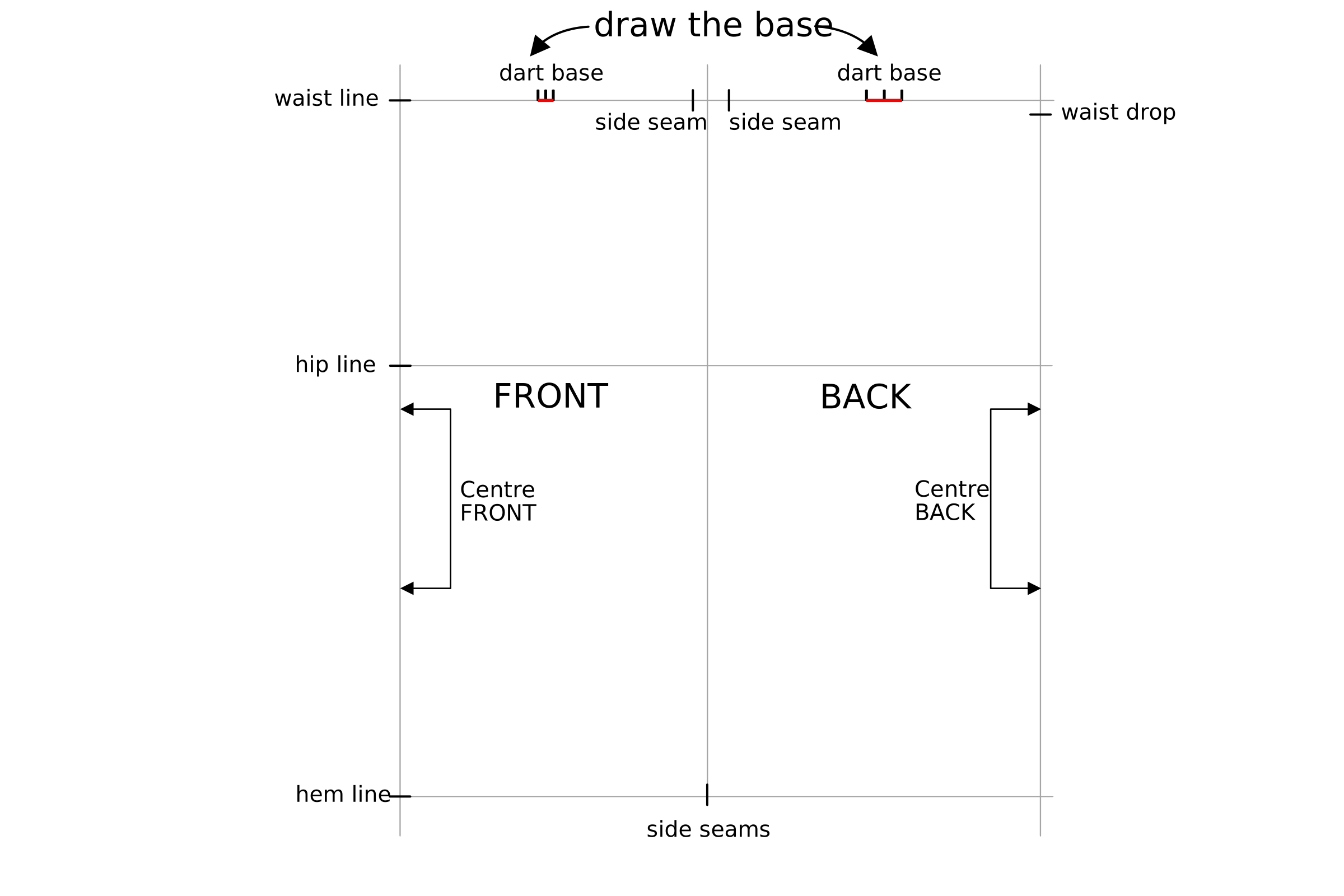
8.Draw the dart base itself, making sure that the previously marked centre lies exactly
in
the middle of the dart base (see the image below).
j
BACK dart width = ((hip circumference + ease at hip) – (waist
circumference + ease at waist)) × 0.4 / 2
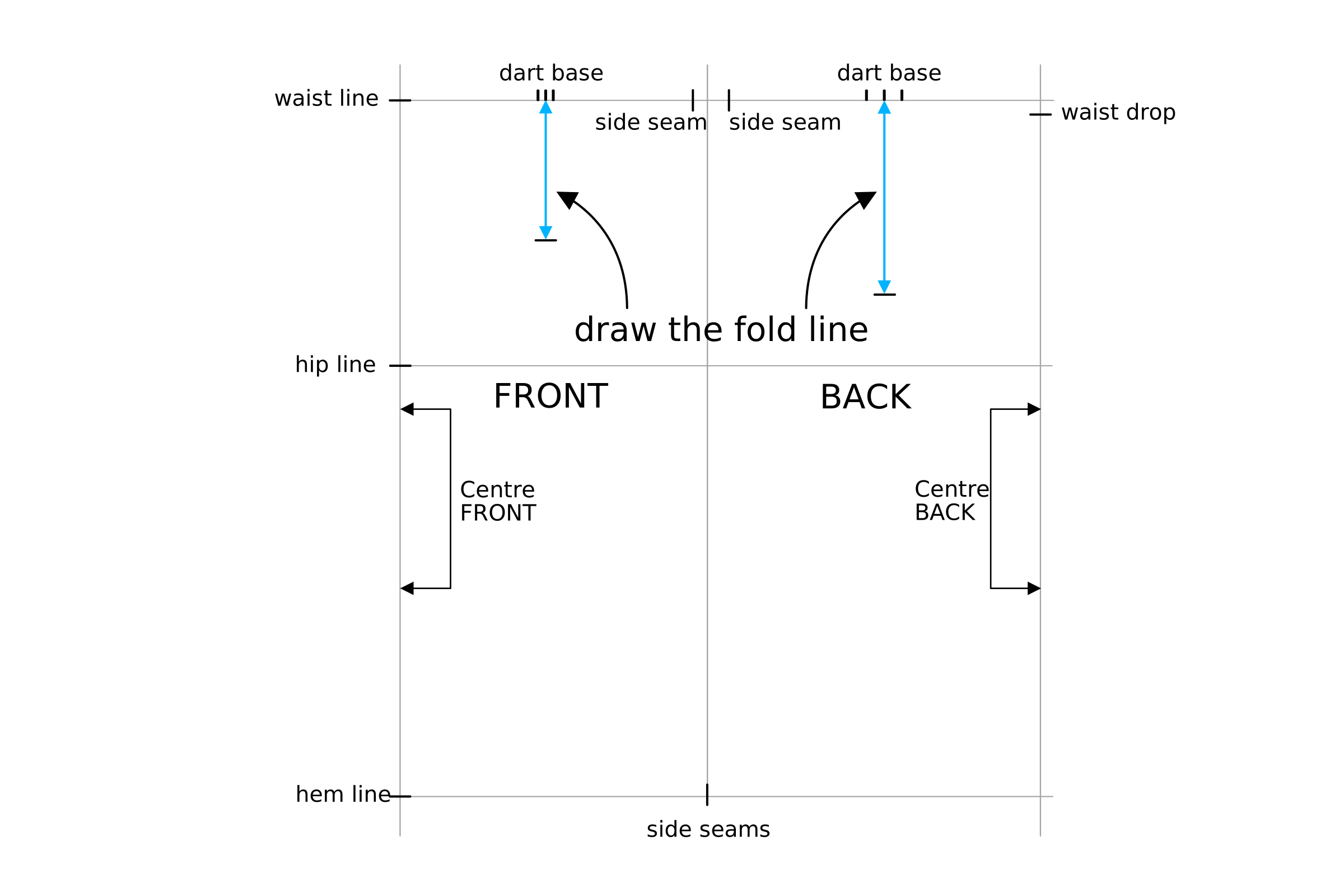
9. Starting at the dart base centre, draw the dart fold line. The end of this line
indicates the end
of the dart (the dart point) (see the image below).
k
BACK dart length = 5” (13 cm)
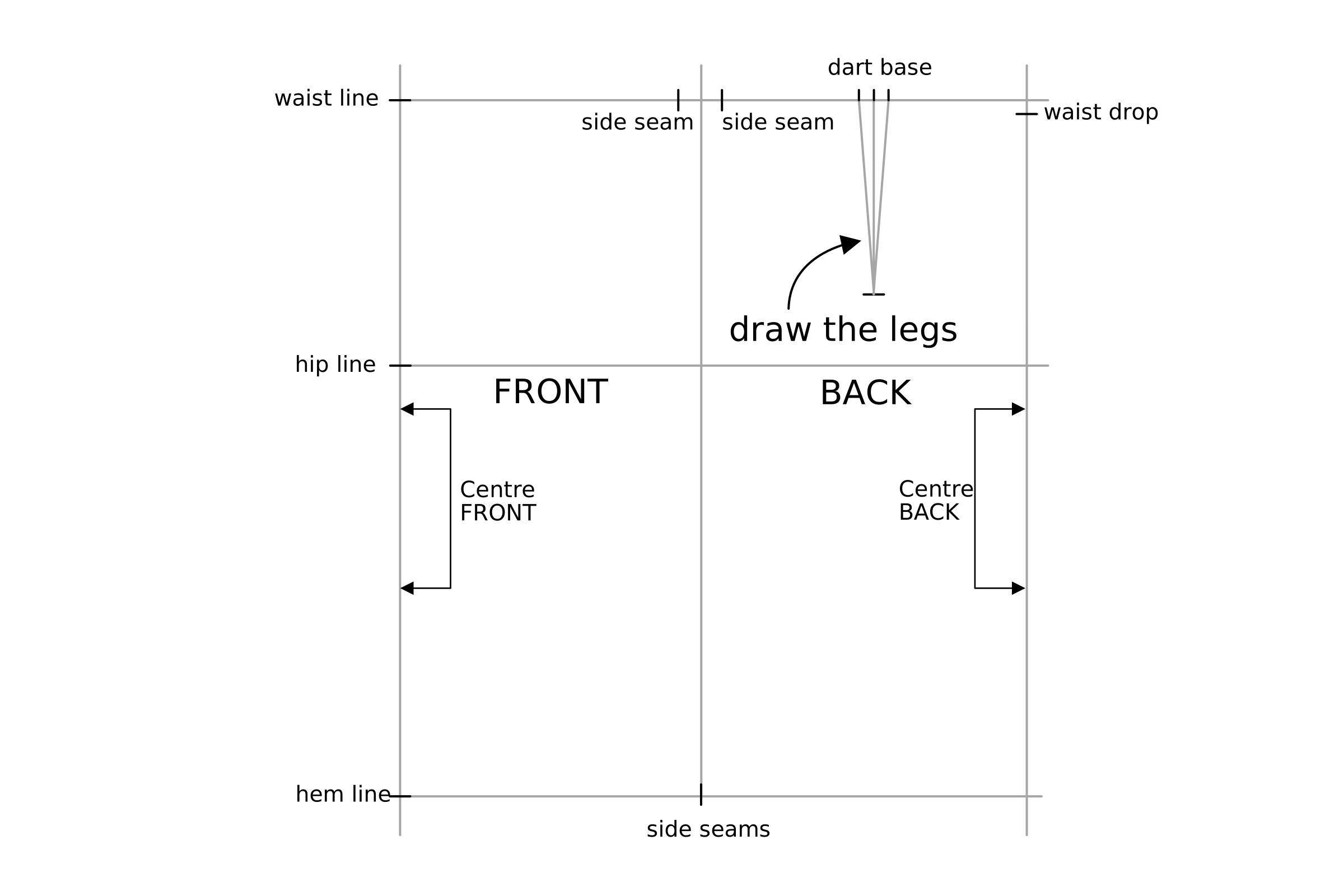
10. From dart base, draw two dart legs towards the dart point. Make sure both dart legs
pass
the
dart base you have drawn on the straight waist line (see the image
below).
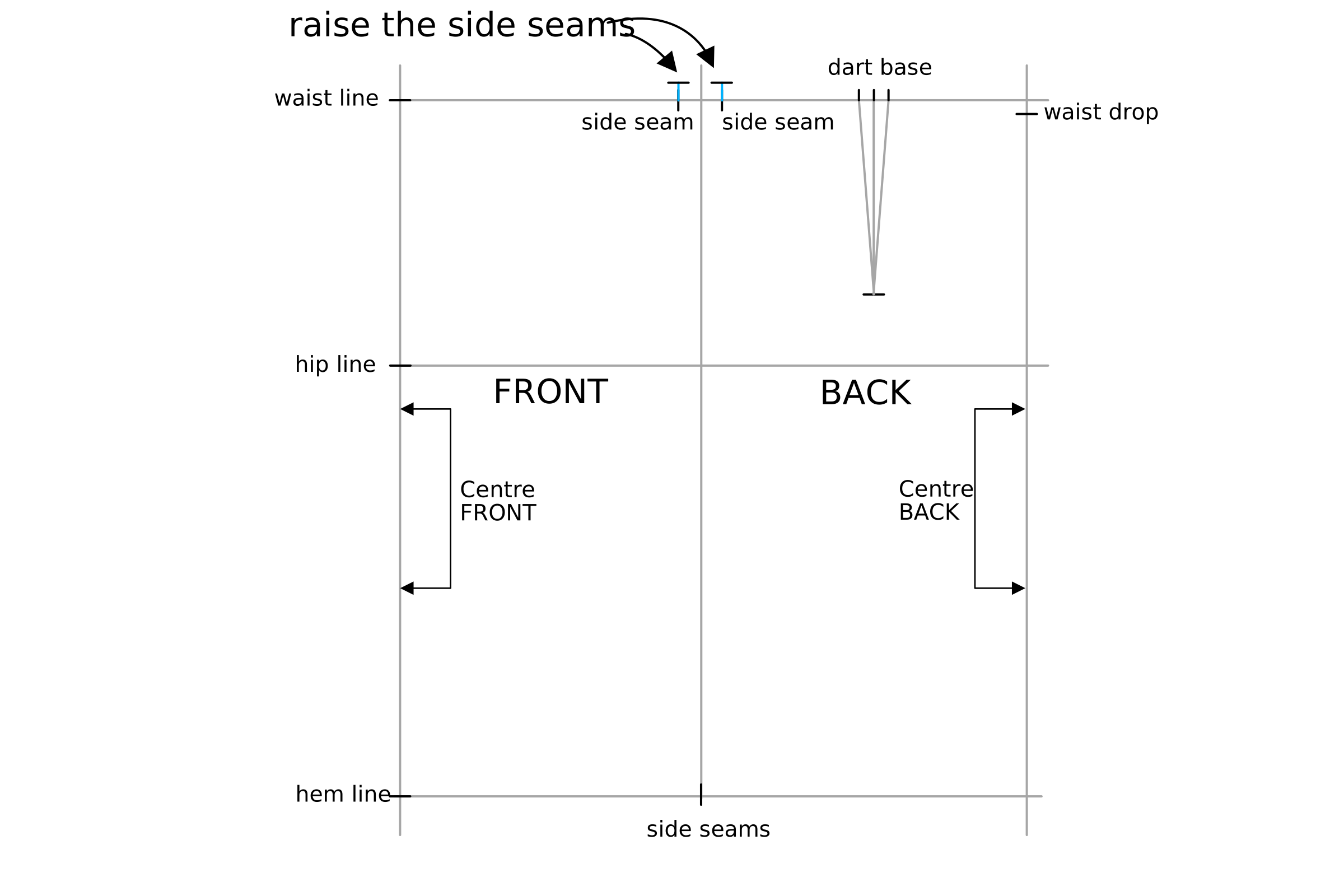
11. To accommodate the hips and create a neat waistline, lift the side seams slightly on
both
the FRONT and BACK pattern pieces. Raise them by 1/2” (1.2 cm) (see the image below).
l
side seam raise = 1/2”
(1.2 cm)
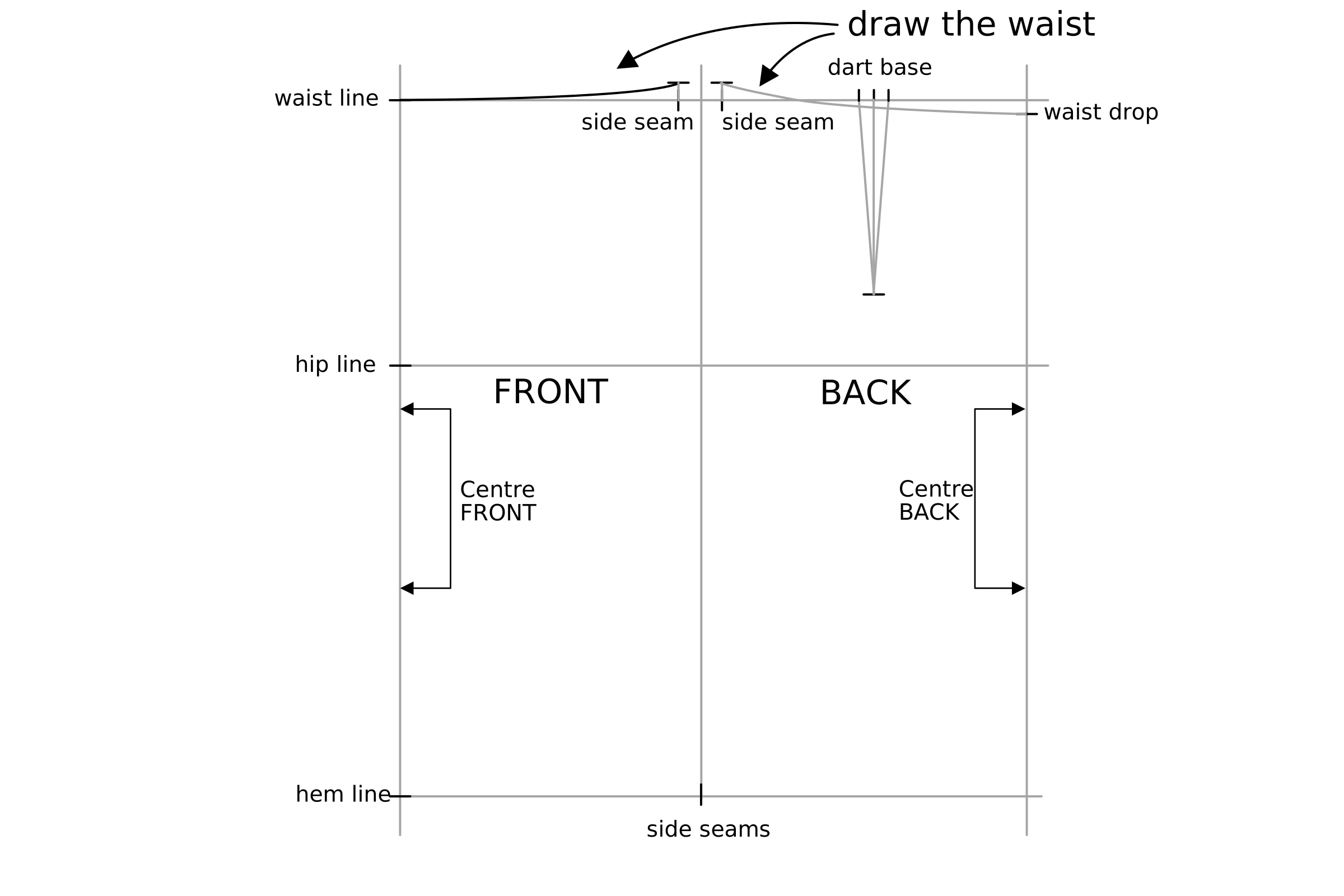
12. Take your French curve and draw the waist at the FRONT and BACK. The waist at the BACK
is
a
preliminary one. You will adjust it later on as you draw the dart (see the image below).
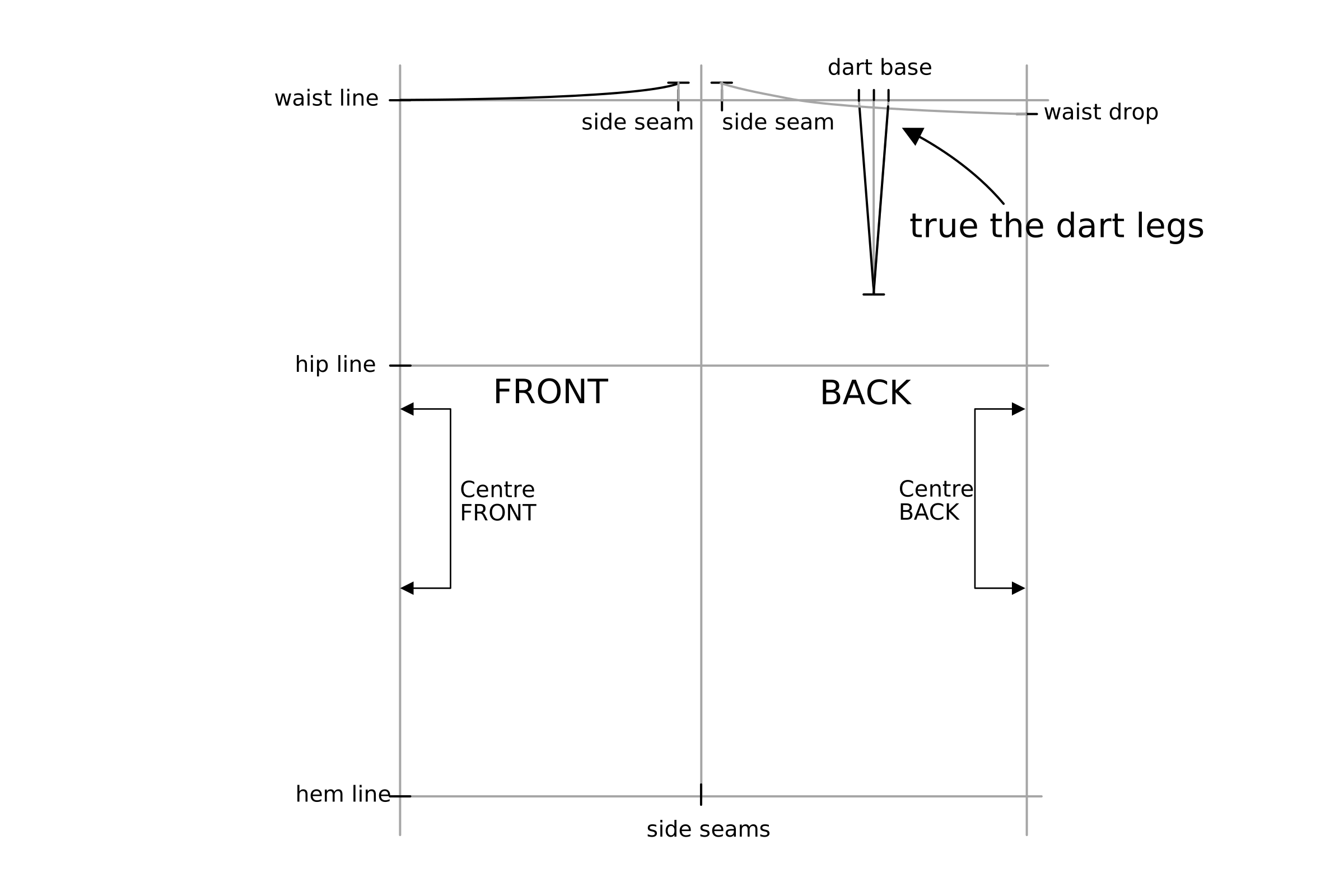
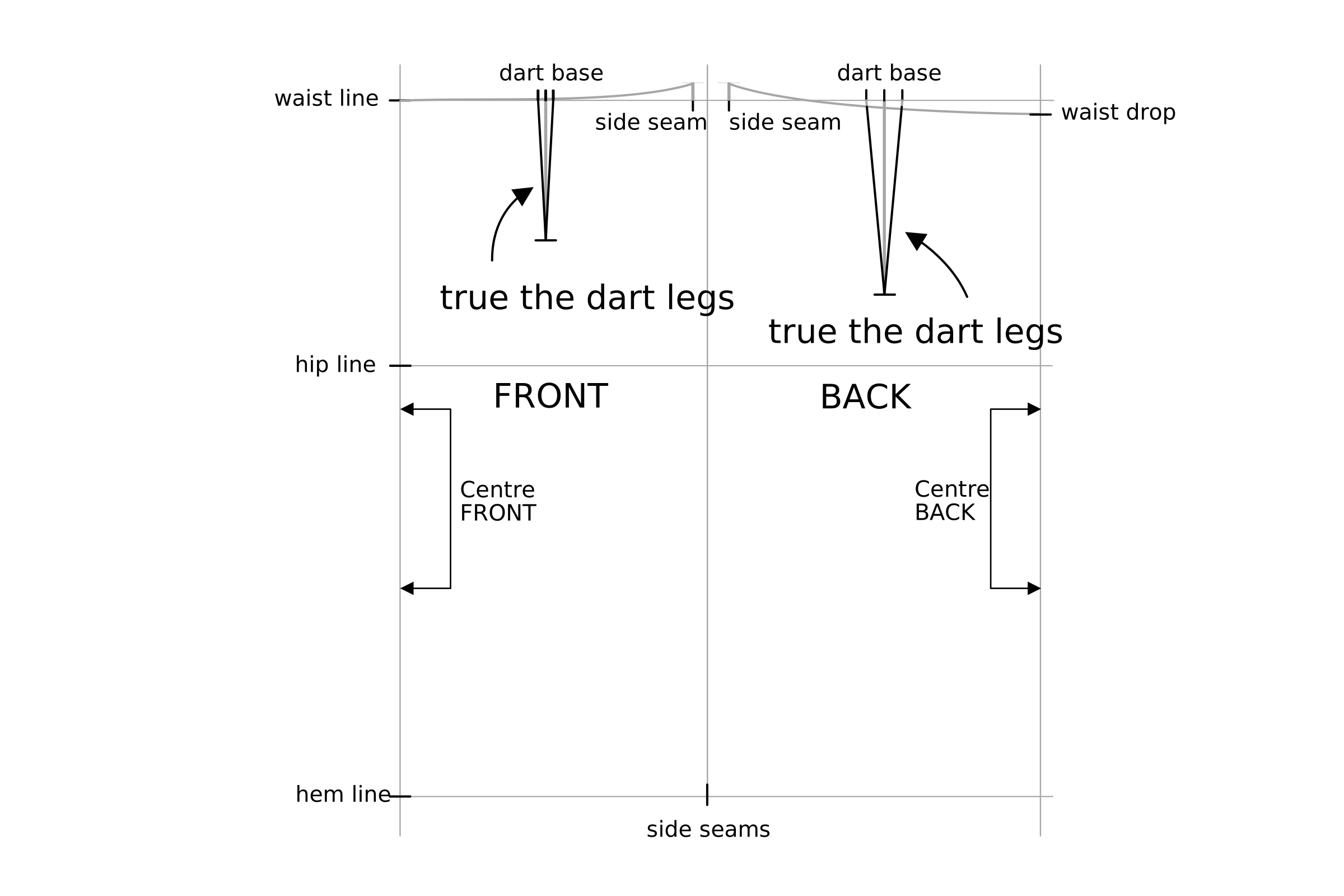
13. After you have draw the waist, the legs of the darts are not equal in length. Measure both
dart
legs
from the dart points to the point, where they cross the curved waist. Make the shorter one the same
length
as
the longer one – true the dart legs (see the
image below).
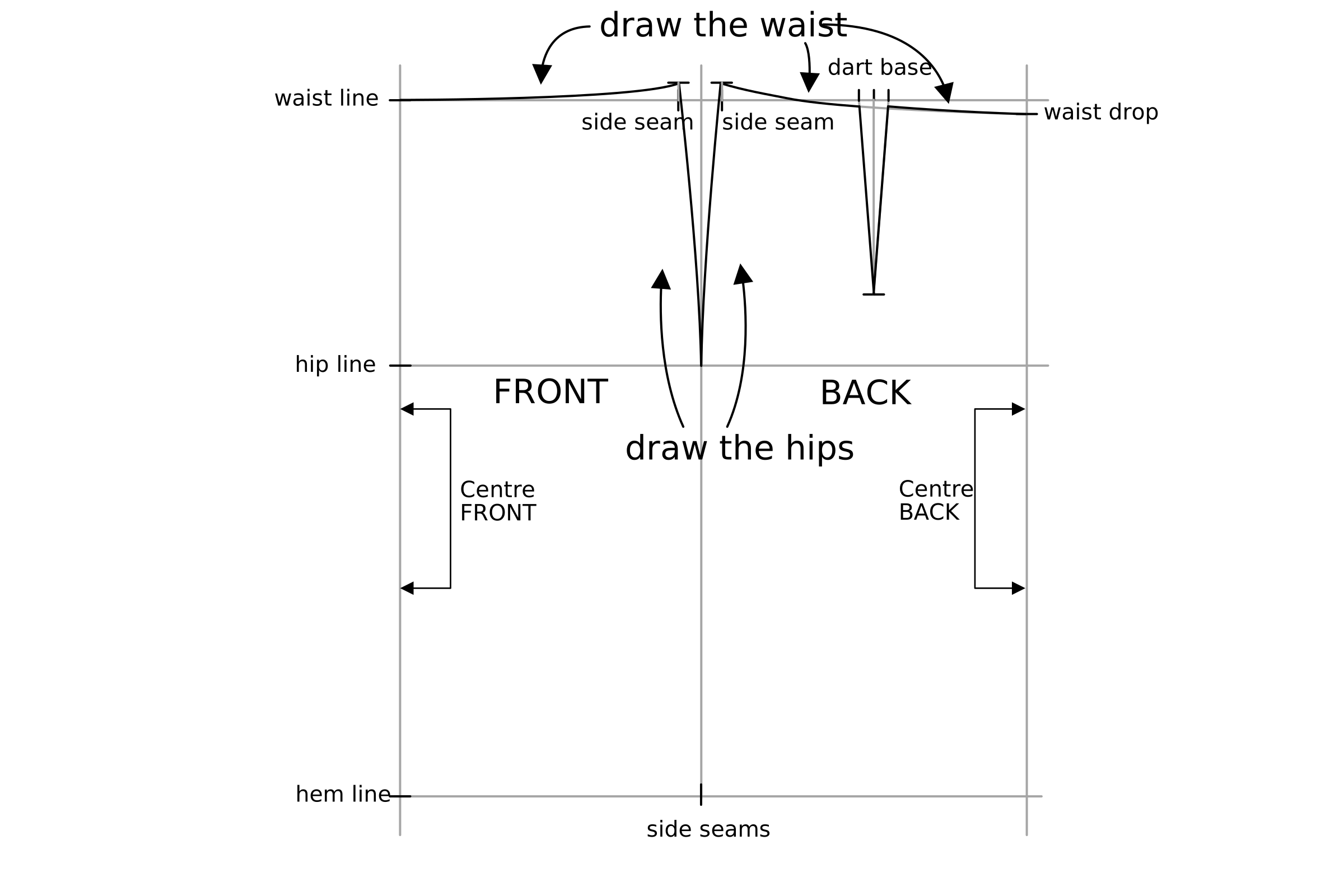
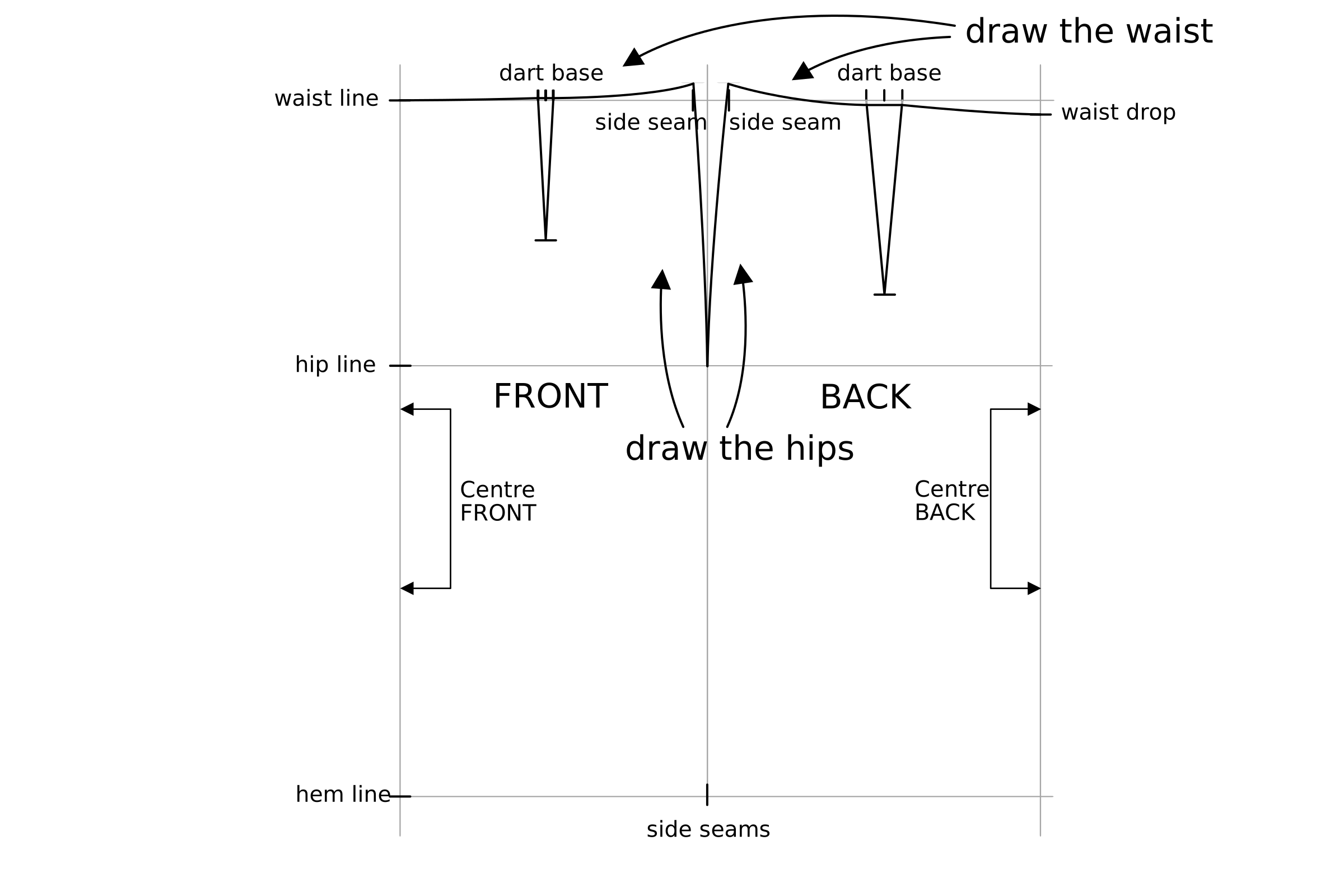
14. Using the French curve, draw the curved part of the hips and the waist at the BACK pattern
piece.
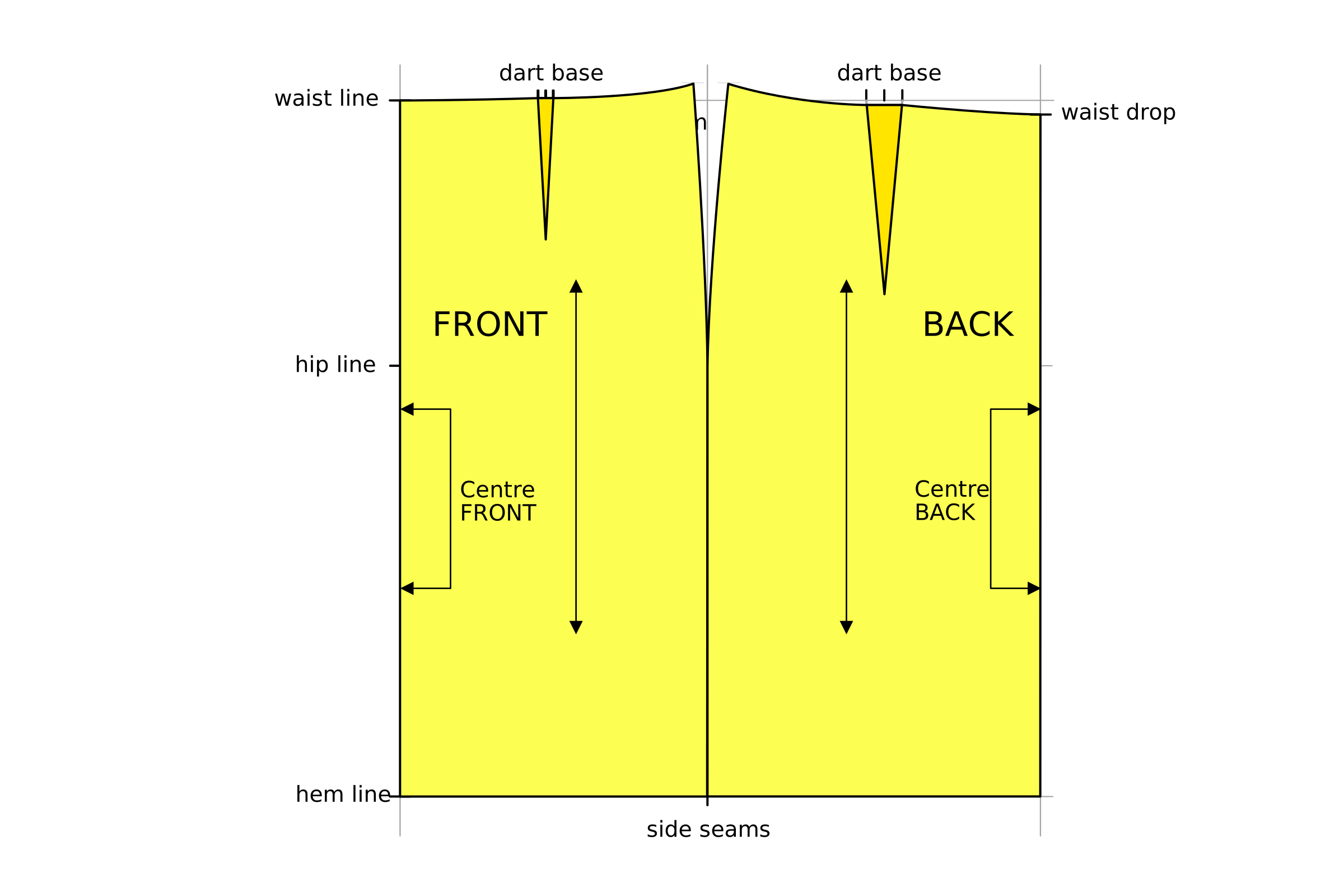
15. Using a long ruler, draw the rest of the pattern: centre FRONT, centre BACK, hem and
side
seams.
Mark the grainlines. Your pattern is complete (see the image below)
1.First, draw a large rectangle.
The bottom of the rectangle represents the hem of the skirt pattern, while the top represents the waist.
The height of the rectangle corresponds to the skirt length (see the image below).
a
b
a = skirt length
b = (hip circumference + ease at hip) / 2
⎯⎯⎯⎯⎯⎯⎯⎯⎯⎯⎯
hip circumference =
ease at hip =
2. On the left vertical line, mark the waist-to-hip length measurement. On the hem line, mark the
side seams. You may notice that the BACK pattern piece has slightly more width than the FRONT. This
is intentional: the body requires a bit more fabric at the back to comfortably accommodate the shape of the
seat, while the front needs less. The exact measurements for the FRONT and BACK can be
calculated using the formula below.
c
d
e
c = waist to hip length
d = (hip circumference + ease at hip) / 2 × 0.48
e = (hip circumference + ease at hip) / 2 × 0.52
⎯⎯⎯⎯⎯⎯⎯⎯⎯⎯⎯
hip circumference =
ease at hip =
Prefer to skip the calculations entirely? ⬇️ Download your PDF tutorial with all personalised measurements, or get your full-scale basic skirt pattern.
3. From the side seams marking, draw a vertical line up to
the waistline. From the hip line marking, draw a horizontal line across the large rectangle (see the
image below). This grid will be the area within which you will draw the basic skirt pattern.
4.Label the pattern: the left side will be the FRONT pattern piece, and the right side will
be the BACK pattern piece (see the image below).
5.On the centre BACK, mark a waist drop: 3/8” (1 cm)
to make the waist at the BACK fit nicely (see the image below). This small drop helps prevent gaping
by allowing the waistline to follow the
natural curve of the lower back. It ensures a snug, comfortable fit and helps the skirt sit smoothly without
pulling away or creating unwanted gaps.
f
f = waist drop = 3/8”
(1 cm)
6. Now, focus on the waist. On both the FRONT and BACK, mark
a preliminary position of the side seams. (see the image below). The measurement for the
FRONT includes the FRONT dart width. The measurement for the BACK includes the BACK dart width.
g
h
g = (waist circumference + ease at waist) / 4 + FRONT dart width
h = (waist circumference + ease at waist) / 4 + BACK dart width
⎯⎯⎯⎯⎯⎯⎯⎯⎯⎯⎯
FRONT dart width = ((hip circumference + ease at hip) – (waist
circumference + ease at waist)) × 0.2 / 2
⎯⎯⎯⎯⎯⎯⎯⎯⎯⎯⎯
BACK dart width = ((hip circumference + ease at hip) – (waist
circumference + ease at waist)) × 0.4 / 2
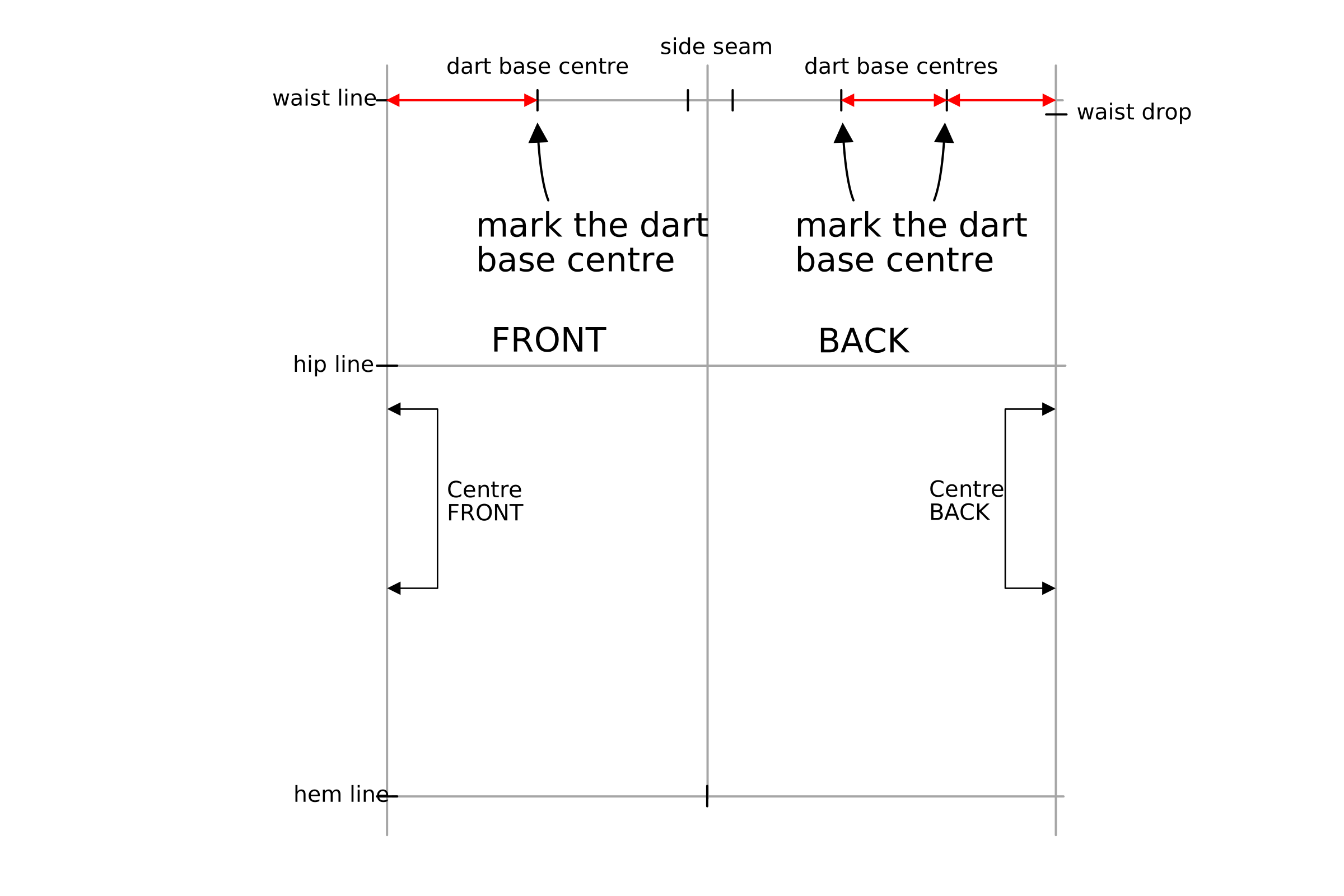
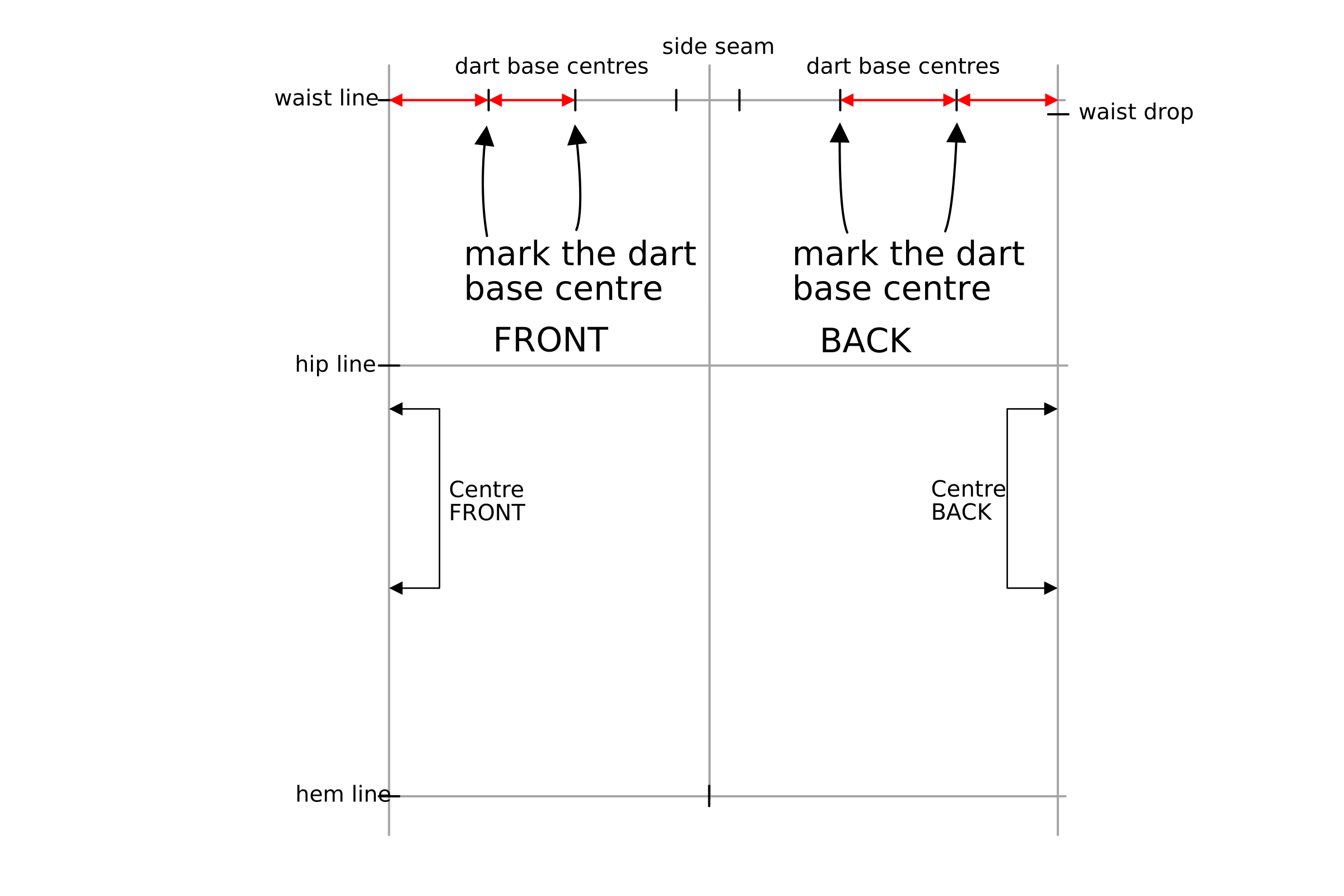
7.Locate and mark the BACK and FRONT dart base centres (see the image below). To find
their
position on the waist, use the formulas below.
j
i
i = FRONT waist width / 2
j = BACK waist width / 2
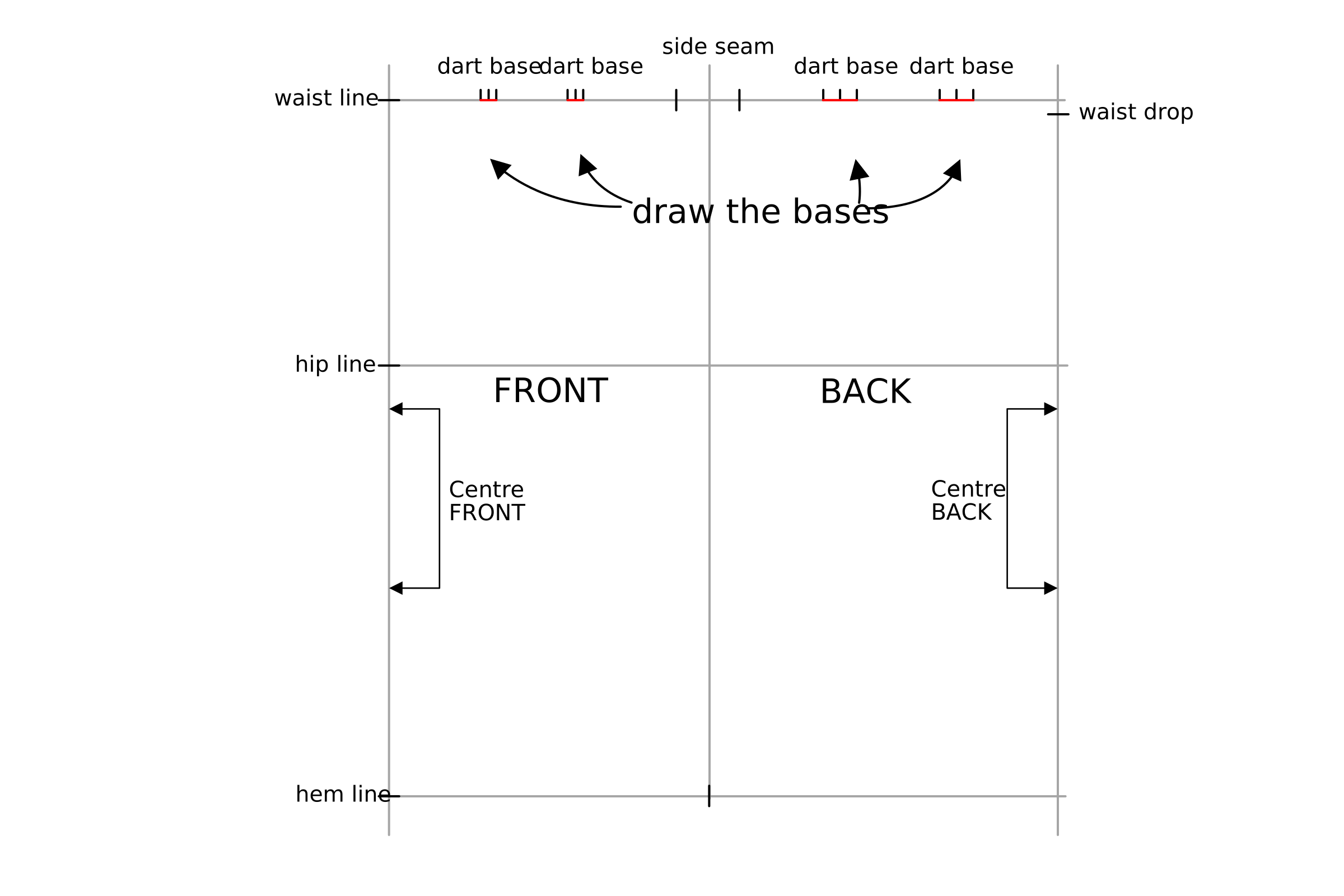
8.Draw the dart bases, making sure that the previously marked centres lie exactly in
the middle of the corresponding dart base.
(see the image below).
k
l
k = FRONT dart width
l = BACK dart width
9. Starting at the dart base centres, draw the dart fold lines. The end of the dart fold line
indicates the end of the dart (the dart point) (see the image below).
m
n
m = FRONT dart length = 4” (10 cm)
n = BACK dart length = 5” (13 cm)
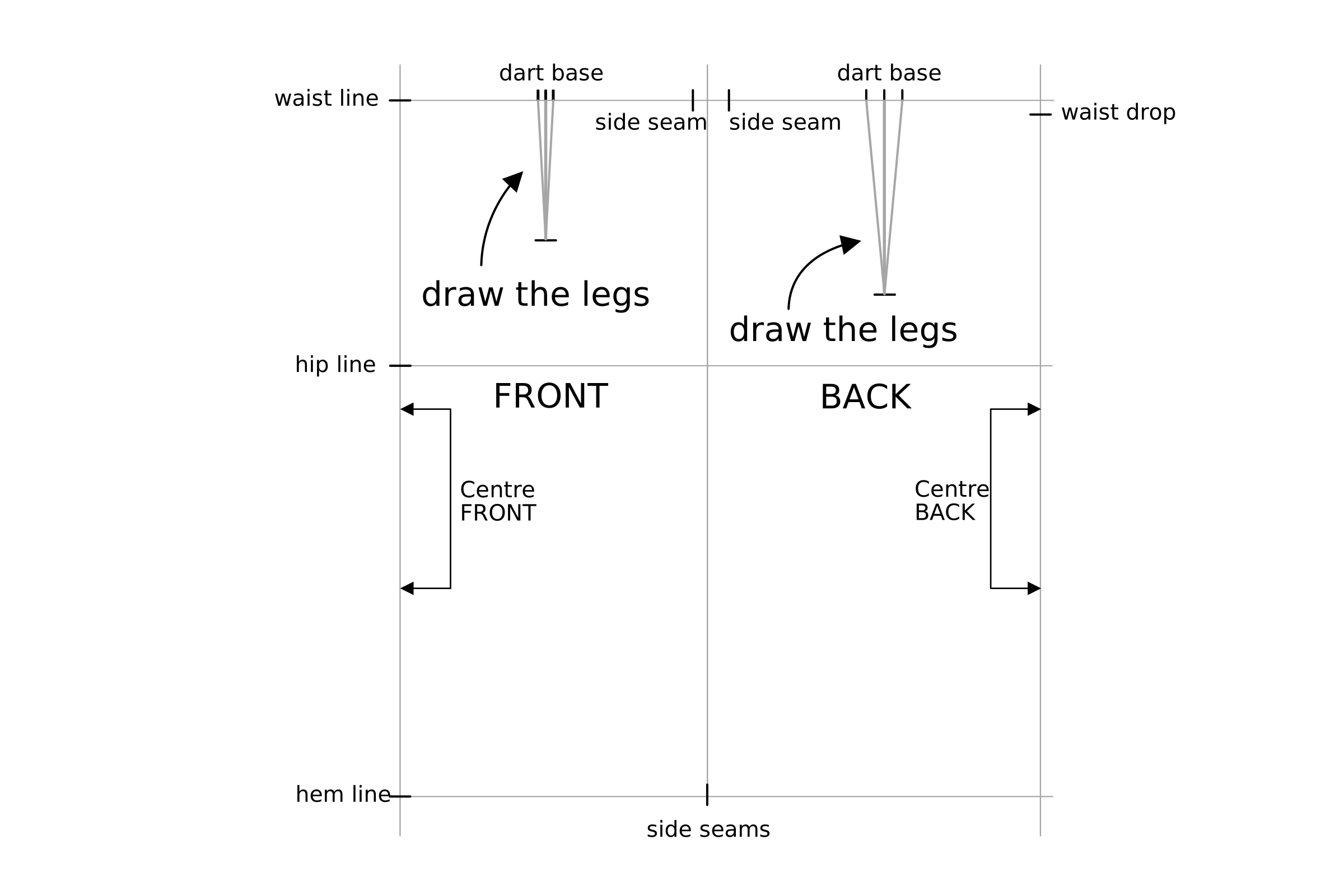
10. From each dart base, draw the dart legs towards the dart point. Make sure both dart legs
pass
the
dart base you have drawn on the straight waist line (see the image below).(see the image
below).
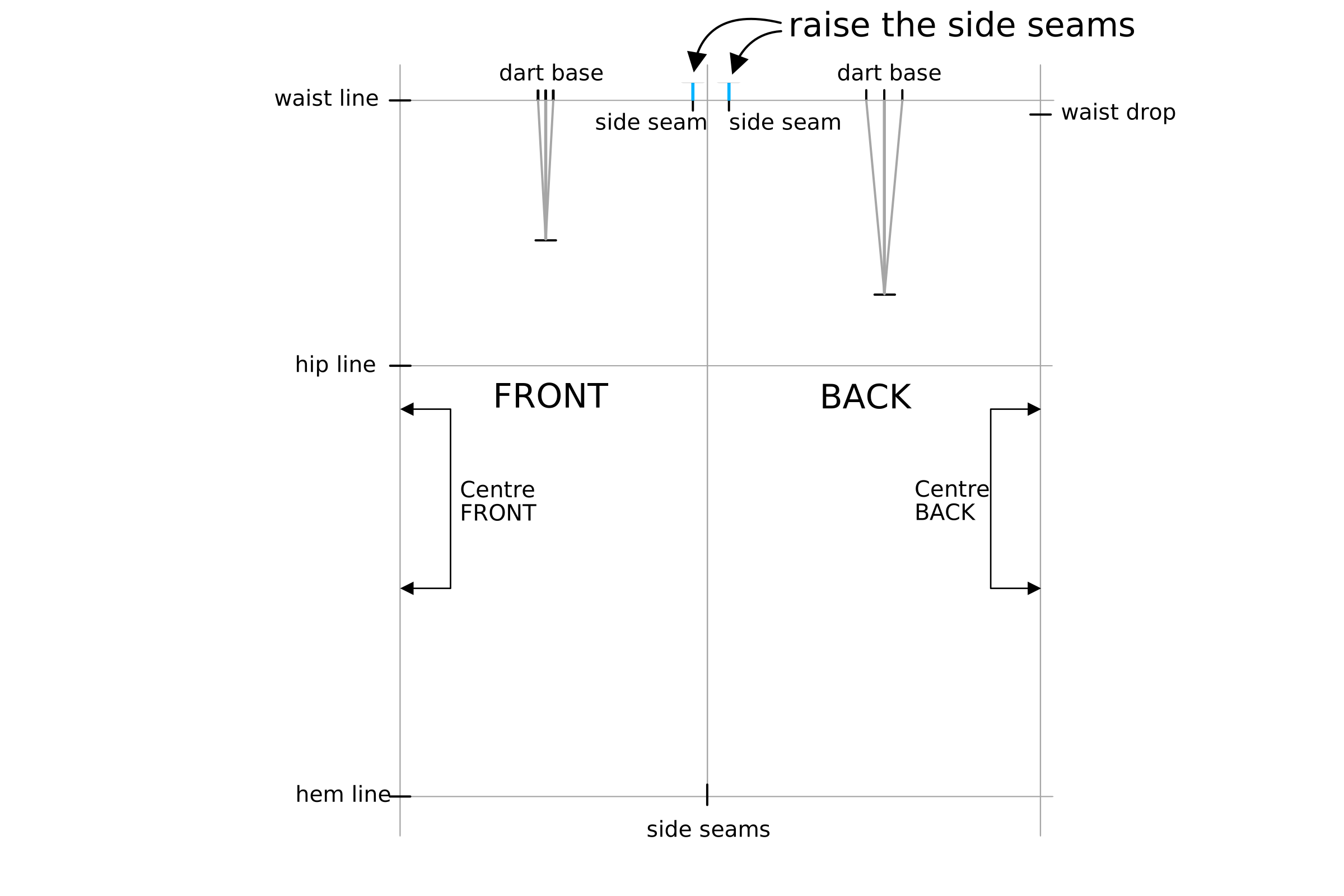
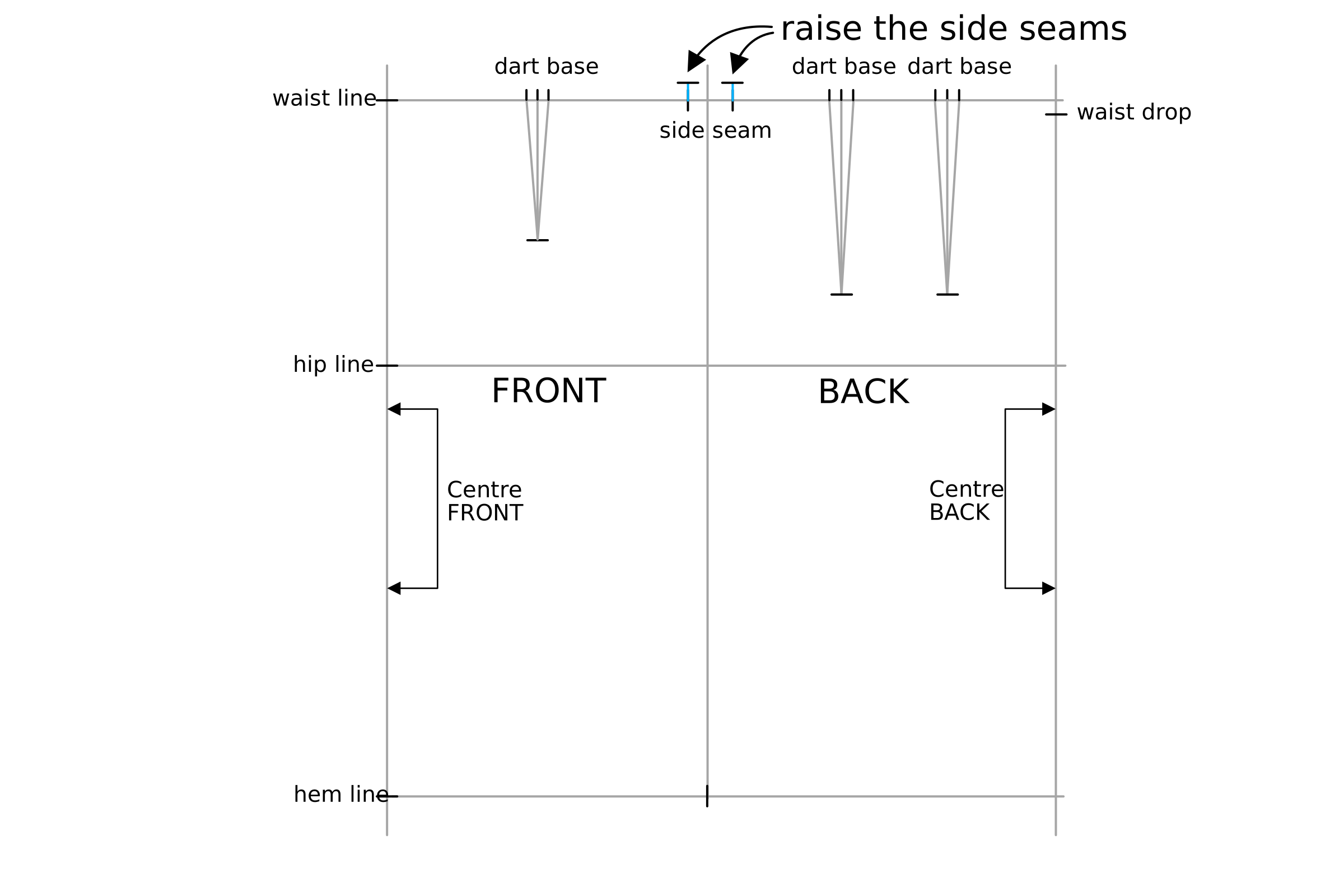
11. To accommodate the hips and create a neat waistline, lift the side seams slightly on both
the front and back pattern pieces. Raise them by 1/2” (1.2 cm) (see the image below).
o
o = side seam raise = 1/2”
(1.2 cm)
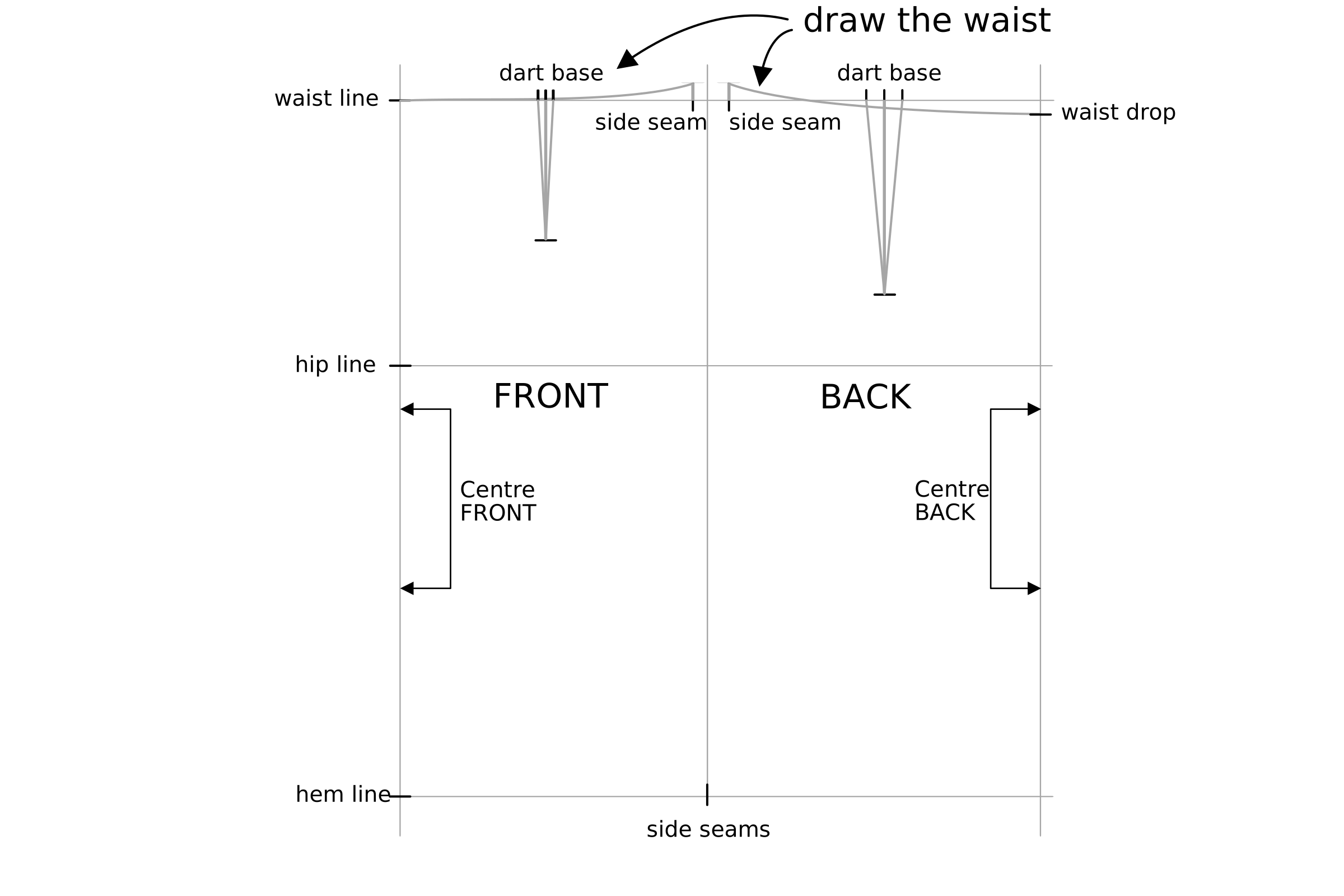
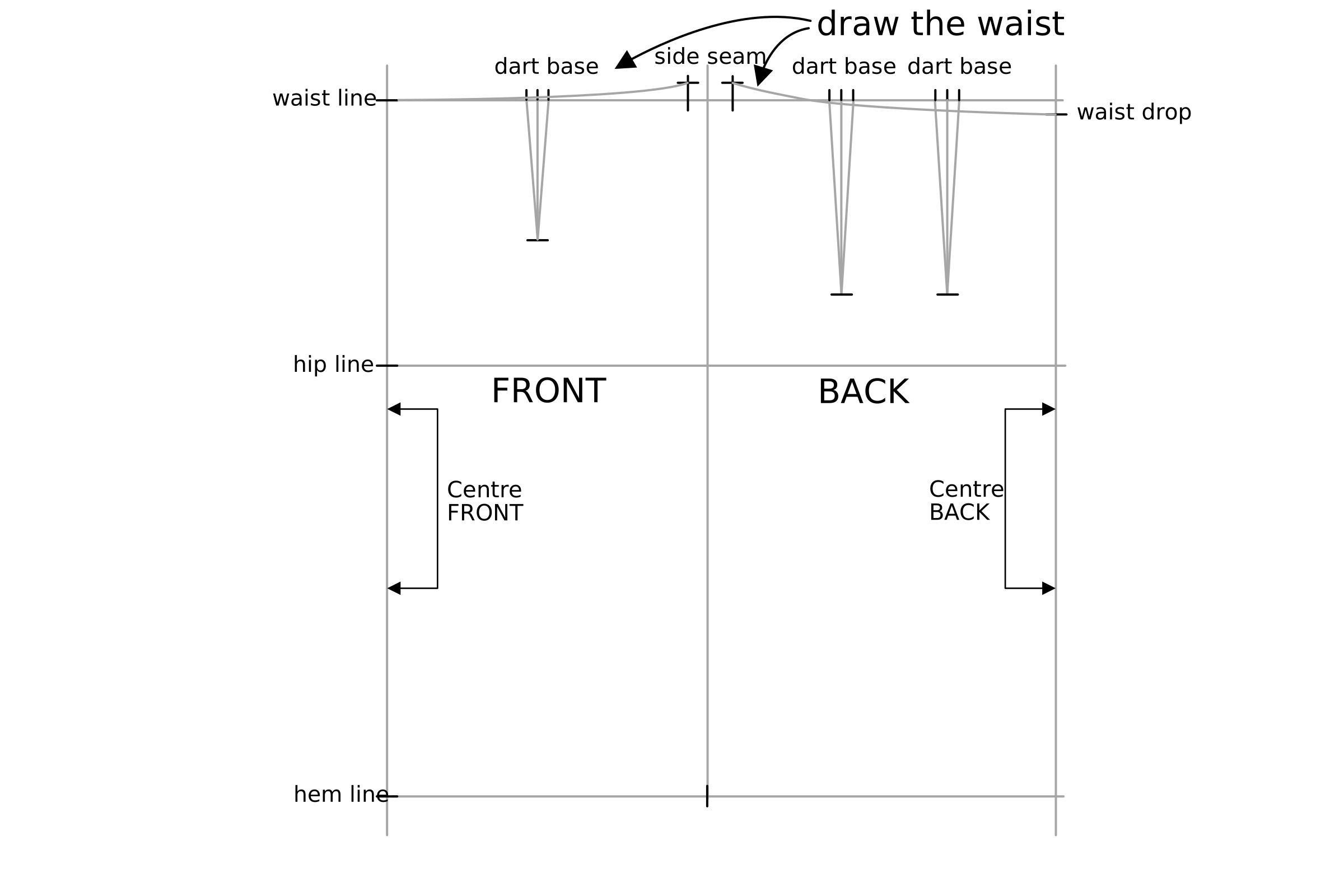
12. Take your French curve and draw the waist at the FRONT and BACK. These waist curves are
preliminary. You will adjust it later on as you draw the dart.(see the image below).
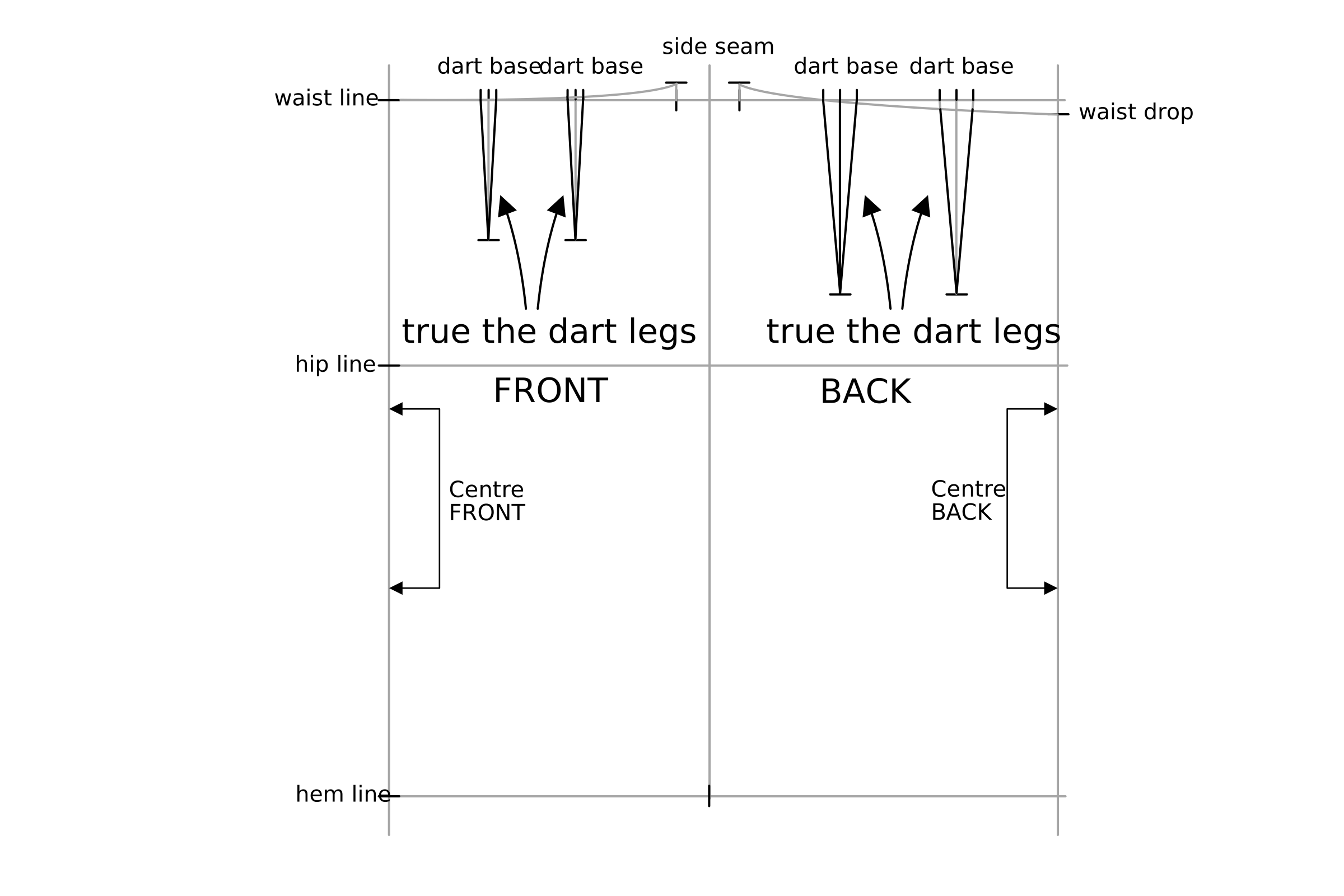
13. After you have draw the waist, the legs of the darts are not equal in length. Measure both dart
legs
from the dart points to the point, where they cross the curved waist. Make the shorter one the same length
as
the longer one – true the dart legs (see the
image below).
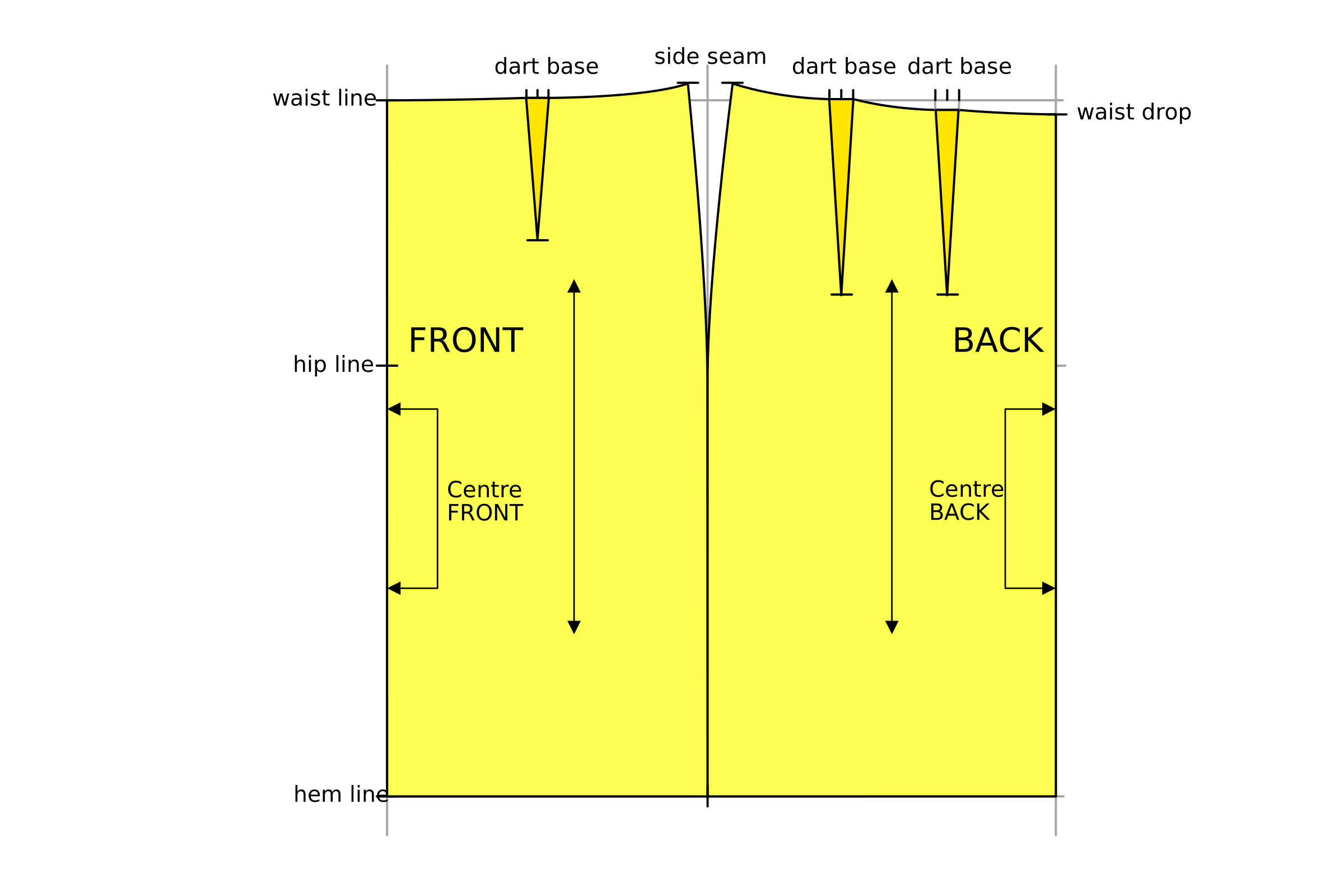
14. Using the French curve, draw the following: the curved part of the hips, curved parts of the
waist line.
15. Using a long ruler, draw the rest of the pattern: centre FRONT, centre BACK, hem and side
seams.
Mark the grainlines. Your pattern is complete (see the image below).
1.First, draw a large rectangle.
The bottom of the rectangle represents the hem of the skirt pattern, while the top represents the waist.
The height of the rectangle corresponds to the skirt length (see the image below).
a
b
a = skirt length
b = (hip circumference + ease at hip) / 2
⎯⎯⎯⎯⎯⎯⎯⎯⎯⎯⎯
hip circumference =
ease at hip =
2. On the left vertical line, mark the waist-to-hip length measurement. On the hem line, mark the
side seams. You may notice that the BACK pattern piece has slightly more width than the FRONT. This
is intentional: the body requires a bit more fabric at the back to comfortably accommodate the shape of the
seat, while the front needs comparatively less. The exact measurement for the FRONT and BACK can be
calculated using the formula below.
c
d
e
c = waist to hip length
d = (hip circumference + ease at hip) / 2 × 0.48
e = (hip circumference + ease at hip) / 2 × 0.52
⎯⎯⎯⎯⎯⎯⎯⎯⎯⎯⎯
hip circumference =
ease at hip =
Prefer to skip the calculations entirely? ⬇️ Download your PDF tutorial with all personalised measurements, or get your full-scale basic skirt pattern.
3. From the side seams marking, draw a vertical line up to
the waistline. From the hip line marking, draw a horizontal line across the large rectangle (see the
image below). This grid will be the area within which you will draw the basic skirt pattern.
4.Label the pattern: the left side will be the FRONT pattern piece, and the right side will
be the BACK pattern piece (see the image
below).
5.On the centre BACK, mark a waist drop: 3/8” (1 cm)
to make the waist at the BACK fit nicely (see the image below). This small drop helps prevent gaping
by allowing the waistline to follow the
natural curve of the lower back. It ensures a snug, comfortable fit and helps the skirt sit smoothly without
pulling away or creating unwanted gaps.
f
waist drop = 3/8” (1 cm)
6. Now, focus on the waist. On both the FRONT and BACK, mark
a preliminary position of the side seams. (see the image below). The measurement for the BACK
includes the BACK dart width. The measurement for the FRONT includes the FRONT dart width.
g
h
g = (waist circumference + ease at waist) / 4 + FRONT dart width
h = (waist circumference + ease at waist) / 4 + 2 × BACK dart width
⎯⎯⎯⎯⎯⎯⎯⎯⎯⎯⎯
FRONT dart width = ((hip circumference + ease at hip) – (waist
circumference + ease at waist)) × 0.2 / 2
⎯⎯⎯⎯⎯⎯⎯⎯⎯⎯⎯
BACK dart width = ((hip circumference + ease at hip) – (waist
circumference + ease at waist)) × 0.4 / 4
7.Locate and mark the centres of the dart bases (see the image below). To find their
position on the waist, use the formulas below.
i
j
i = (FRONT waist width + FRONT dart width) / 2
j = (BACK waist width + 2 × BACK dart width) / 3
8.Draw the dart bases, making sure that the previously marked centres lie exactly in
the middle of the corresponding dart base.
(see the image below).
k
l
l
k = FRONT dart width
l = BACK dart width
9. Starting at the dart base centre, draw the dart fold line. The end of this line indicates the end
of the dart (the dart point) (see the image below).
m
n
FRONT dart length = 4” (10 cm)
BACK dart length = 5” (13 cm)
10. From each dart base, draw dart legs towards the dart point. Make sure both dart legs pass
the
dart base you drew on the straight waist line (see the image
below).
11. To accommodate the hips and create a neat waistline, lift the side seams slightly on both
the front and back pattern pieces. Raise them by 1/2” (1.2 cm) (see the image below).
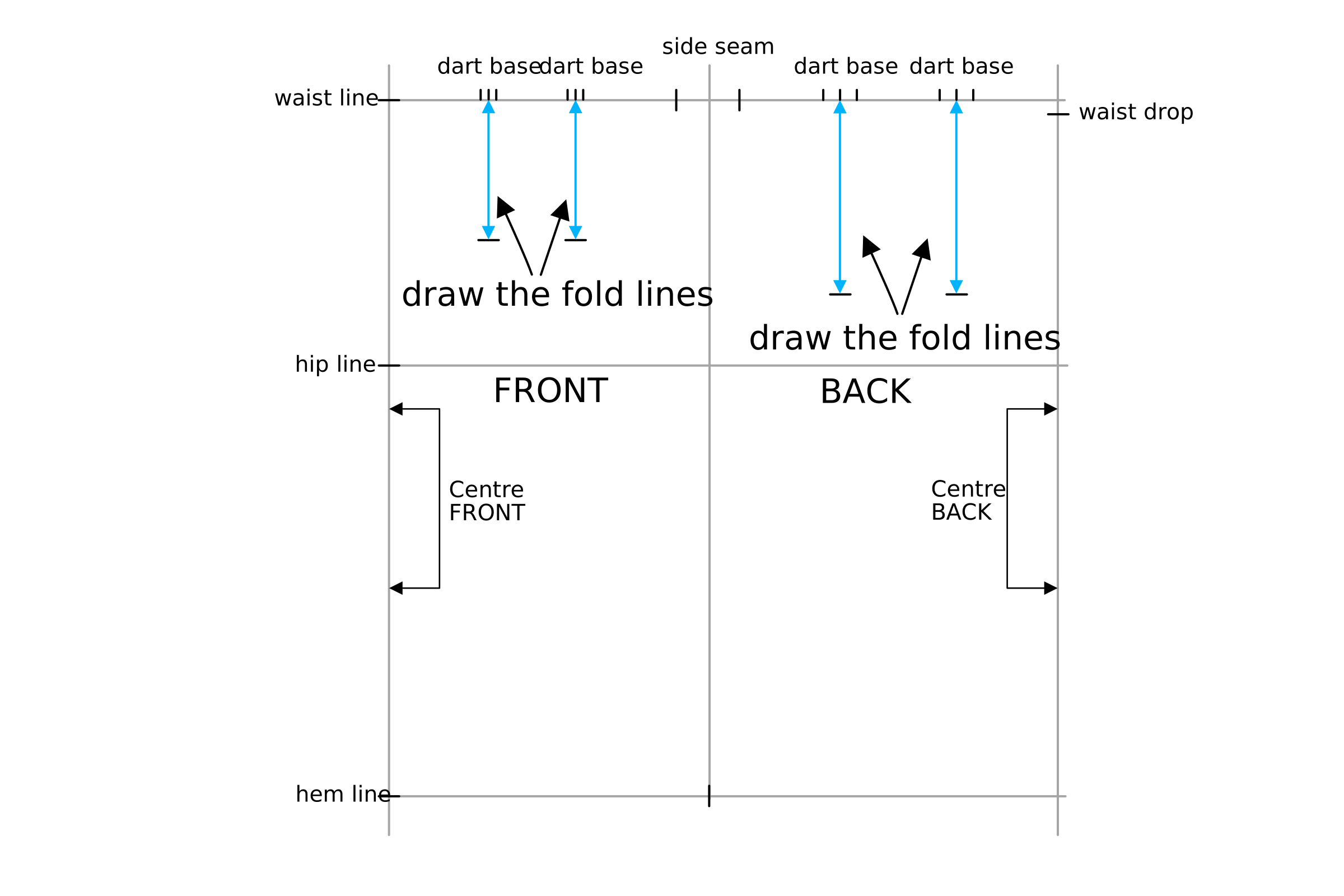
o
side seam raise = 1/2”
(1.2 cm)
12. Take your French curve and draw the waist at the FRONT and BACK. These waist curves
are
preliminary. You will adjust them later as you draw the final dart legs (see the image below).
13. After you have drawn the waist, the legs of the darts are not equal in length. Measure both
dart
legs from the dart points to the point, where they cross the curved waist. Make the shorter one the same
length
as the longer one – true the dart legs (see the image below).
14. Using the French curve, draw the following: the curved part of the hips, the individual waist
lines for the FRONT and BACK pattern.
15. Using a long ruler, draw the rest of the pattern: centre FRONT, centre BACK, hem, and
side
seams.
Mark the grainlines. Your pattern is complete (see the image below).
1.First, draw a large rectangle.
The bottom of the rectangle represents the hem of the skirt pattern, while the top represents the waist.
The height of the rectangle will corresponds to the skirt length (see the image below).
a
b
a = skirt length
b = (hip circumference + ease at hip) / 2
⎯⎯⎯⎯⎯⎯⎯⎯⎯⎯⎯
hip circumference =
ease at hip =
2. On the left vertical line, mark the waist-to-hip length measurement. On the hem line, mark the
side seams. You may notice that the BACK pattern piece has slightly more width than the FRONT. This
is intentional: the body requires a bit more fabric at the back to comfortably accommodate the shape of the
seat, while the front needs less. The exact measurements for the FRONT and BACK can be
calculated using the formula below.
c
d
e
c = waist to hip length
d = (hip circumference + ease at hip) / 2 × 0.48
e = (hip circumference + ease at hip) / 2 × 0.52
⎯⎯⎯⎯⎯⎯⎯⎯⎯⎯⎯
hip circumference =
ease at hip =
Prefer to skip the calculations entirely? ⬇️ Download your PDF tutorial with all personalised measurements, or get your full-scale basic skirt pattern.
3. From the side seams marking, draw a vertical line up to
the waistline. From the hip line marking, draw a horizontal line across the large rectangle (see the
image below). This grid will be the area within which you will draw the basic skirt pattern.
4.Label the pattern: the left side will be the FRONT pattern piece, and the right side will
be the BACK pattern piece (see the image
below).
5.On the centre BACK, mark a waist drop: 3/8” (1 cm)
to make the waist at the BACK fit nicely (see the image below). This small drop helps prevent gaping
by allowing the waistline to follow the
natural curve of the lower back. It ensures a snug, comfortable fit and helps the skirt sit smoothly without
pulling away or creating unwanted gaps.
f
waist drop = 3/8”
(1 cm)
6. Now, focus on the waist. On both the FRONT and BACK, mark
a preliminary position of the side seams. (see the image below). The measurement for the BACK
includes the BACK dart width. The measurement for the FRONT includes the FRONT dart width.
g
h
g = (waist circumference + ease at waist) / 4 + 2 × FRONT dart width
h = (waist circumference + ease at waist) / 4 + 2 × BACK dart width
⎯⎯⎯⎯⎯⎯⎯⎯⎯⎯⎯
FRONT dart width = ((hip circumference + ease at hip) – (waist
circumference + ease at waist)) × 0.2 / 4
⎯⎯⎯⎯⎯⎯⎯⎯⎯⎯⎯
BACK dart width = ((hip circumference + ease at hip) – (waist
circumference + ease at waist)) × 0.4 / 4
7.Locate and mark the centres of the dart bases (see the image below). To find their
position on the waist, use the formulas below.
i
i
j
j
i= FRONT waist width / 3
j = BACK waist width / 3
8.Draw the dart bases, making sure that the previously marked centres lie exactly in
the middle of the corresponding dart base.
(see the image below).
k
k
l
l
k = FRONT dart width
l = BACK dart width
9. Starting at each dart base centre, draw the dart fold line for all darts. The end of the
fold line indicates the end
of the dart (the dart point) (see the image below).
m
n
FRONT dart length = 4” (10 cm)
BACK dart length = 5” (13 cm)
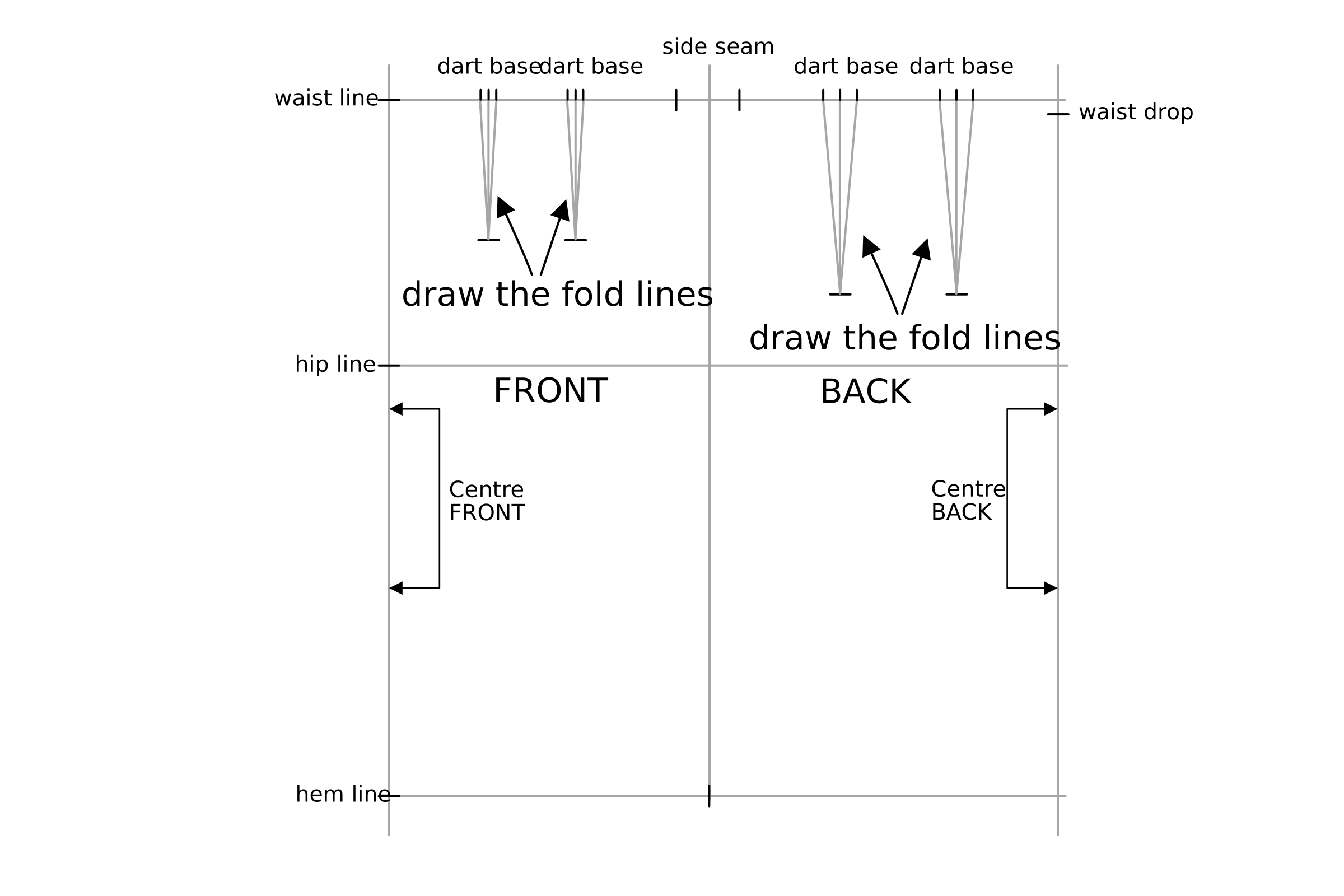
10. From each dart base, draw the dart legs towards the dart point. Make sure both dart legs
pass the
dart base you drew on the straight waist line (see the image below).
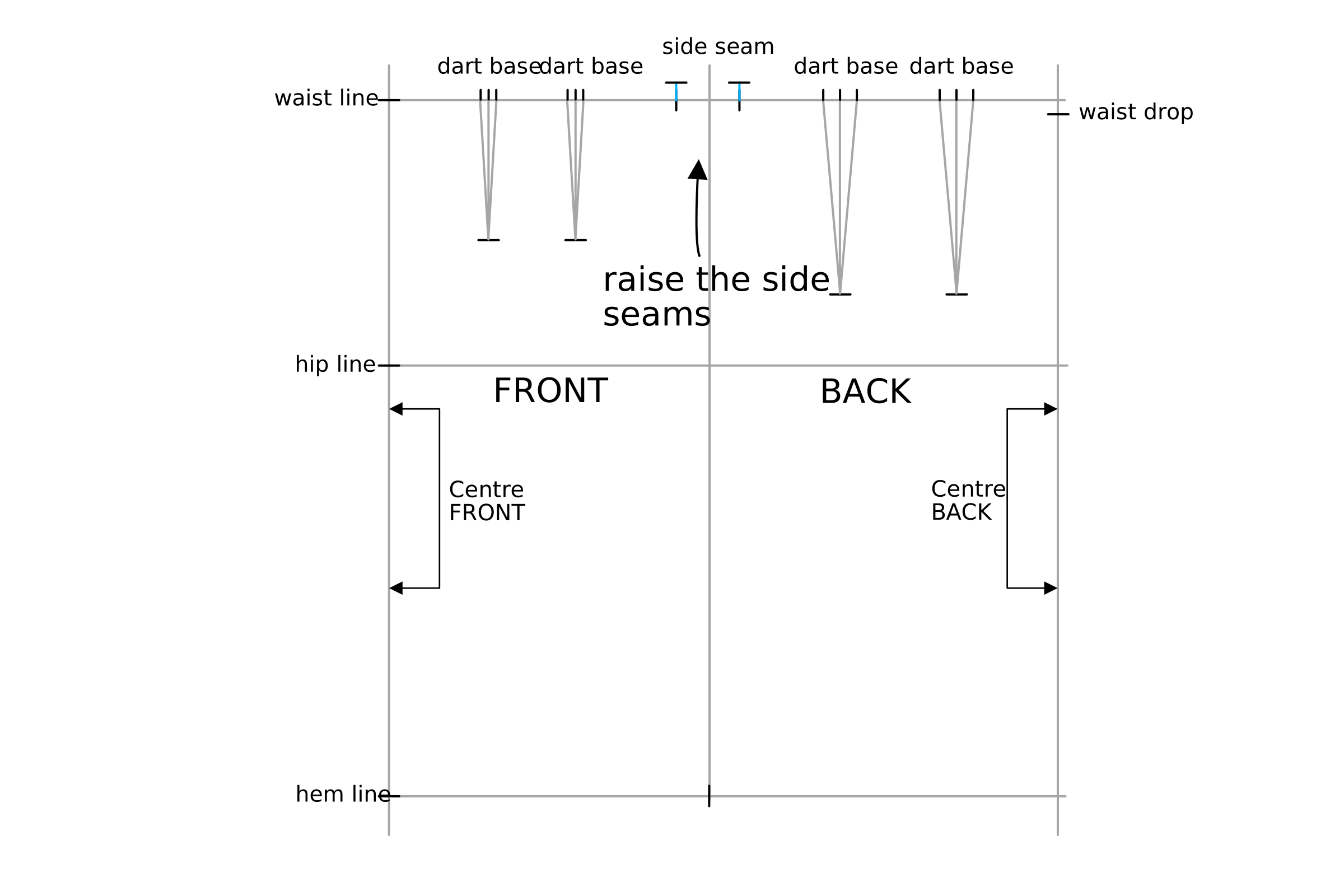
11. To accommodate the hips and create a neat waistline, lift the side seams slightly on both
the front and back pattern pieces. Raise them by 1/2” (1.2 cm) (see the image below).
s
side seam raise = 1/2”
(1.2 cm)
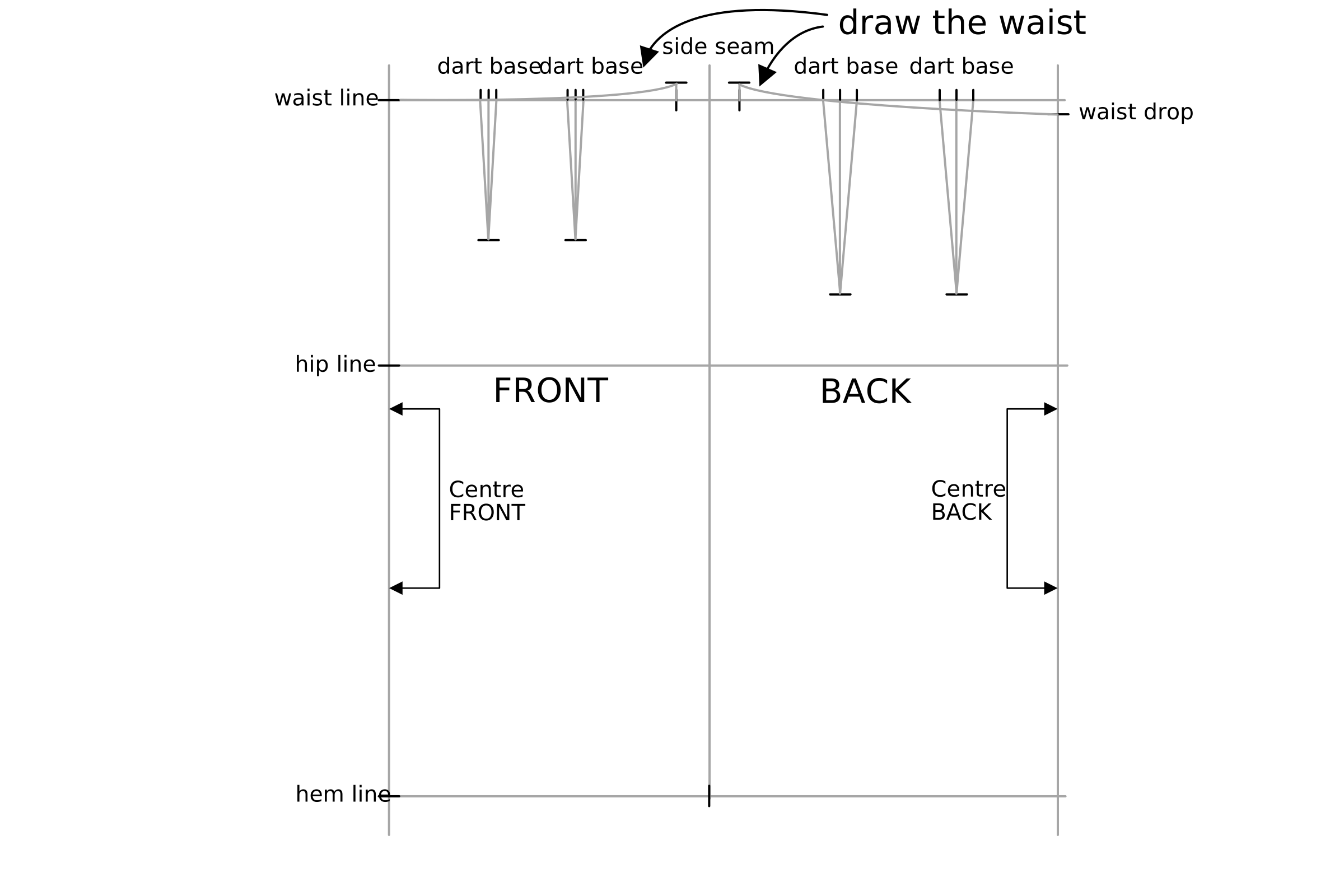
12. Take your French curve and draw the waist at the FRONT and BACK. These waist curves are
preliminary. You will adjust them later as you draw the final dart legs (see the image below).
13. After you have drawn the waist, the legs of the darts are not equal in length. Measure both dart
legs
from the dart points to the point, where they cross the curved waist. Make the shorter one the same length
as
the longer one – true the dart legs (see the
image below).
14. Using the French curve, draw the following: the curved part of the hips, the individual waist
lines for the FRONT and BACK pattern.
15. Using a long ruler, draw the rest of the pattern: centre FRONT, centre BACK, hem and side
seams.
Mark the grainlines. Your pattern is complete (see the image below).
Redirecting to checkout
How did you like this post?
Click on a star to rate it!
Average rating 4.7 / 5. Vote count: 31
No votes so far! Be the first to rate this post.
We are sorry that this post was not useful for you!
Let us improve this post!
Tell us how we can improve this post?
Working with the basic skirt sloper
If you are just beginning to make your own dress patterns, you might find the following publication by Adele P. Margolis useful. It will teach you how to alternate basic blocks (like the basic skirt sloper in this tutorial to make a different skirt type) to make your own designs.
Now that you’ve drafted your custom skirt pattern in minutes with no math, you can also learn how to draft a clean, well-fitting waistband to complete your skirt. Moreover, unleash your creativity by transforming it into A-line, pencil, or pleated designs with our step-by-step guides—start designing stunning, personalised outfits today.
Yes, it’s perfect for beginners. The skirt is one of the simplest blocks to draft from scratch, and the free tutorial walks you through each step with clear explanations. You don’t need any prior pattern-drafting experience to complete it confidently.
What fabric should I use for my basic skirt block?
The basic skirt block requires a standard woven fabric. Ideally plain weave, such as cotton or a cotton blend, works best for beginners due to its stability and ease of handling. Avoid stretchy or slippery fabrics like knits or satin until you’re confident with your pattern.
How much fabric will I need for the basic skirt pattern?
Fabric needs vary with size and skirt length, but 1.5 to 2 yards of 45″ wide fabric is typically enough for a knee-length version. The $4.99 PDF tutorial includes exact yardage calculations and a personalised cutting layout.
How do I take my body measurements for the skirt?
To take accurate measurements for your basic skirt block, prepare:
Tape measure, two elastic bands, pen, paper (optional, to note your measurements).
Steps to measure:
Place one elastic around your natural waist (the narrowest part of your torso).
Place the second elastic around the widest part of your hips — this ensures the skirt allows for comfortable movement.
Measure your waist circumference at the elastic.
Measure your hip circumference at the second elastic.
Measure the vertical distance between the two elastics (waist to hip length).
Measure your desired skirt length from the waist down (knee length is recommended).
How much ease should I add when drafting the basic skirt block?
Add a comfortable amount of ease at the natural waist so that any patterns you derive from this block will have the preferred fit at the waist. When testing the basic block, use elastic to keep the skirt in place while checking the fit. Avoid zero ease at the hips, as this would restrict movement.
What tools do I need to draft the real-size pattern?
To draw the pattern itself, please prepare all these tools:
large sheet of paper or tissue paper
pencil (for drawing guidelines — shown in grey in the tutorial)
Sharpie, pen, or liner (for tracing final pattern lines — shown in black)
long ruler
French curve ruler or flexible curve ruler (for curved pattern lines)
Can I use this pattern with stretch woven fabric?
Yes, stretch wovens can work well with this pattern. The added give allows for a closer fit and less hip ease, while still using the same drafting method.
Can I use this pattern with knit fabric?
No, this pattern is not suitable for knit fabrics. Knits stretch more and need a different drafting approach with negative ease.
Will I receive anything by post?
No, the tutorial and pattern are digital products in PDF format and will not be delivered by post.
Will I receive anything by email?
You’ll receive a payment confirmation email with your receipt. The PDF files are downloaded immediately after purchase and are not sent via email.
Processing…
You have successfully subscribed to anicka.design.
Whoops! There was an error and we couldn't process your subscription. Please reload the page and try again.
Share this:
Like this:
LikeLoading...
17 thoughts on “How To Draft A Basic Skirt Pattern: Step-by-step, No Math”
Thank you, I remembered wrong! I reread it and it’s just as you say. Thank you for taking the time to help!
No problem, I hope your skirt will turn out well!
Anicka
Loading...
Thank you so much! I’m really excited (and nervous) to try this. Just to clarify, when you said, “you can use 0 ease (or more) for the hips,” I assume you mean 0 or negative ease, as the original tutorial uses 0 ease at the hips. For a woven fabric, it sounds like the zero ease at the hips is what helps the skirt stay in place. For knit fabrics, does that job change to the waist? I ask because it sounds like that is where you recommend reducing ease the most.
the default eases in the tutorial are the following: WAIST – 0 cm to keep the skirt in place, HIPS – 5 cm to be able to move and sit down.
For the knit fabric: WAIST – 0 cm ease (or slightly less), without the darts – this will make a snug fit at the waist.
HIPS – you can try 0 cm or more (meaning 1 cm, 2 cm, 3 cm…) for the hips. In this area, I probably wouldn’t go for a negative ease… However, the amount of ease you want to add (or remove) depends on the fabric and the look you want to achieve.
I hope I have answered your questions :).
Anicka
Loading...
Hi Nicole,
good question, thank you! Knit fabrics stretch and conform to the body, so you need less ease compared to woven fabrics.
Reduce the amount of ease: You may use 0 ease for the waist or even negative ease. Negative ease means that the skirt’s waist would have a slightly smaller circumference than your waist. Also, you can use 0 ease (or more) for the hips. All of this depends on the look you want to achieve.
Adjust the side seams: Take in the side seams to accommodate the reduced ease. You can do this by redrawing the side seam lines.
Waistband: Instead of a fixed waist with a zipper, you can use an elastic band or elastic casing.
If you have any further questions, please feel free to contact me again 🙂
Anicka
Thank you so much for this and the bodice block! It came out perfectly the first time, and I finally have a set of slopers that take into account things like the odd way my shoulders hang! On a different note, I have had the book by Adele Margolis for a couple of years, and use it all the time. It’s been nice for modifying commercial patterns, but it’ll be even better now that I have a custom block! Thank you so much!
Hi, thank you very much for your comment.
Draft a standard (not elastic) waistband – either a straight or a curved one.
A striaght one is easier to explain in text. It is actually a long rectangle that accomodates the skirt waist circumference + overlap for the button. (The darts at the waist are not part of the circumference). The width of the waistband depends on your personal preference.
Btw: thank you very much for your excellent question. I will include drafring waistbands into the tutorial :)!
Loading...
I can’t thank you enough for your hard work and providing to all of us these wonderful information. You made the sewing tutorials much easier. Thanks a million
Hi, I’m happy to read your comment :). I’m definitely planning to make a calculator (dimensions, fabric consumption, etc.) for the basic bodice block and sleeve too. However, it will take me some time as I have finished some of the features on this page (like downloading calculated results as PDF documents) only recently.
Loading...
Hi Fanny,
I have done some work and made the basic bodice block drafting tutorial. It also includes a calculator for individual parts of the basic bodice pattern (all downloadable as pdf document).
I will have to make some minor adjustments (clarifying how to connect the bodice and skirt). However it is a solid base you can use to draft the pattern and make your own designs.
I have to day thank you sooo much for sharing this wealth of information. I used your circle skirt calculator and it was very easy. I love and appreciate your attention to detail. Take care!!!!




















Thank you, I remembered wrong! I reread it and it’s just as you say. Thank you for taking the time to help!
No problem, I hope your skirt will turn out well!
Anicka
Thank you so much! I’m really excited (and nervous) to try this. Just to clarify, when you said, “you can use 0 ease (or more) for the hips,” I assume you mean 0 or negative ease, as the original tutorial uses 0 ease at the hips. For a woven fabric, it sounds like the zero ease at the hips is what helps the skirt stay in place. For knit fabrics, does that job change to the waist? I ask because it sounds like that is where you recommend reducing ease the most.
Hi Nicole,
the default eases in the tutorial are the following: WAIST – 0 cm to keep the skirt in place, HIPS – 5 cm to be able to move and sit down.
For the knit fabric: WAIST – 0 cm ease (or slightly less), without the darts – this will make a snug fit at the waist.
HIPS – you can try 0 cm or more (meaning 1 cm, 2 cm, 3 cm…) for the hips. In this area, I probably wouldn’t go for a negative ease… However, the amount of ease you want to add (or remove) depends on the fabric and the look you want to achieve.
I hope I have answered your questions :).
Anicka
Hi Nicole,
good question, thank you! Knit fabrics stretch and conform to the body, so you need less ease compared to woven fabrics.
Reduce the amount of ease: You may use 0 ease for the waist or even negative ease. Negative ease means that the skirt’s waist would have a slightly smaller circumference than your waist. Also, you can use 0 ease (or more) for the hips. All of this depends on the look you want to achieve.
Adjust the side seams: Take in the side seams to accommodate the reduced ease. You can do this by redrawing the side seam lines.
Waistband: Instead of a fixed waist with a zipper, you can use an elastic band or elastic casing.
If you have any further questions, please feel free to contact me again 🙂
Anicka
How would you modify this for using knit fabric?
Thank you so much for this and the bodice block! It came out perfectly the first time, and I finally have a set of slopers that take into account things like the odd way my shoulders hang! On a different note, I have had the book by Adele Margolis for a couple of years, and use it all the time. It’s been nice for modifying commercial patterns, but it’ll be even better now that I have a custom block! Thank you so much!
Hi Ella, thank you for the lovely comment. I’m glad to hear that your basic blocks turned out well.
Anicka
Hi, and thank you so much for all of your hard work in putting together these tutorials!
For the skirt, what kind of waist band would you recommend?
Hi, thank you very much for your comment.
Draft a standard (not elastic) waistband – either a straight or a curved one.
A striaght one is easier to explain in text. It is actually a long rectangle that accomodates the skirt waist circumference + overlap for the button. (The darts at the waist are not part of the circumference). The width of the waistband depends on your personal preference.
Btw: thank you very much for your excellent question. I will include drafring waistbands into the tutorial :)!
I can’t thank you enough for your hard work and providing to all of us these wonderful information. You made the sewing tutorials much easier. Thanks a million
Hi, thank you very much for your comment 🙂 I hope my other (both current and future) tutorials will be as useful to you as this one.
Amazing. Thank you very much. Would you do it also for a basic bodice block? That would really be awesome!!
Hi, I’m happy to read your comment :). I’m definitely planning to make a calculator (dimensions, fabric consumption, etc.) for the basic bodice block and sleeve too. However, it will take me some time as I have finished some of the features on this page (like downloading calculated results as PDF documents) only recently.
Hi Fanny,
I have done some work and made the basic bodice block drafting tutorial. It also includes a calculator for individual parts of the basic bodice pattern (all downloadable as pdf document).
I will have to make some minor adjustments (clarifying how to connect the bodice and skirt). However it is a solid base you can use to draft the pattern and make your own designs.
Here is the link: https://anicka.design/how-to-draft-a-basic-bodice-block-pattern/
I have to day thank you sooo much for sharing this wealth of information. I used your circle skirt calculator and it was very easy. I love and appreciate your attention to detail. Take care!!!!
Hi, thank you for your nice comment. I’m very happy you find my page and tools useful :).